
Last updated: January 2026
What are acetal products?
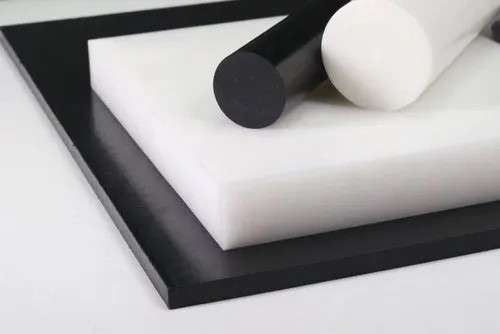
Acetal (often called POM plastic) is widely used for machined components that need low friction, good wear resistance, and tight tolerances. In industrial purchasing and engineering, “acetal products” typically refers to stock shapes like acetal sheet and acetal rod—plus the finished parts made from them.
To compare availability across materials and forms, use our plastics search.
Need help quoting parts or turning stock into finished components? See our services.
The important detail: not all acetal is the same. The two common families are acetal copolymer and acetal homopolymer (sometimes referenced by brand names such as Delrin). Both can be excellent—when matched to the right conditions.
Acetal products: 6 differences that matter (copolymer vs homopolymer)
If you’re comparing acetal products, these are the practical differences that tend to show up in real-world performance and in machining.
1) Moisture and hot-water performance
- Acetal copolymer often performs better in hot-water environments and wet service.
- Homopolymer is frequently chosen for stiffness and strength in controlled environments; confirm the grade if wet service is involved.
2) Dimensional stability and tolerance hold
- Both materials can hold tight tolerances, but part geometry, thickness, and temperature swings matter.
- For long parts or thin walls, copolymer can be a safer choice when stability is the priority.
3) Strength and stiffness
- Acetal homopolymer is often selected when higher stiffness is needed for a structural wear component.
- Copolymer may trade a bit of stiffness for improved toughness and environmental resistance.
4) Wear and friction behavior
- Acetal products are popular for wear strips, bushings, guides, rollers, and conveyors because of low friction.
- Additives (PTFE, glass fiber, specialty lubricants) can change wear behavior—confirm the grade, not just “acetal.”
5) Machinability and surface finish
- Both machine well, but tool geometry and heat control still matter—especially for thin features.
- Homopolymer can produce a very clean finish; copolymer can be more forgiving in demanding setups.
6) Chemical resistance and service environment
- Acetal handles many oils and fuels, but compatibility should be confirmed for cleaners, solvents, and oxidizers.
- If washdowns are involved, selecting the right acetal products and grade is critical.
How to choose the right acetal products for your application
To spec the best acetal products, start with the operating environment. A short checklist can prevent costly substitutions, rework, and early wear.
If the project includes machining plus assembly or finishing, explore our custom plastics fabrication services.
- Temperature range (continuous + peak)
- Wet service or hot-water exposure
- Wear mode (sliding, rolling, abrasive contact)
- Chemical exposure (oils, cleaners, solvents)
- Required tolerance and inspection method
- Part geometry (thin walls, long spans, press fits)
- Grade requirements (unfilled vs filled; PTFE-filled, glass-filled, etc.)
If you’re unsure whether copolymer vs homopolymer is best, share the application details and let your supplier recommend a grade based on performance—not just price.
Machining considerations for acetal
Acetal is one of the easier engineering plastics to machine, but good results still depend on process control—especially when you need repeatable tolerances.
Need tighter tolerance guidance? See our plastic machining capabilities.
- Control heat buildup to prevent dimensional drift.
- Use sharp tooling and appropriate feeds/speeds to avoid smearing or chatter.
- Confirm tolerances at operating temperature if parts will see heat or wet service.
- Plan for wall thickness and internal stress—thin sections can move after machining.
Common mistakes when specifying acetal
- Specifying only “acetal” without defining copolymer vs homopolymer
- Assuming all acetal products have the same wear performance (grade matters)
- Ignoring hot-water or washdown conditions
- Over-specifying ultra-tight tolerances without considering temperature movement
Frequently Asked Questions
Are Delrin and acetal the same?
Delrin is a common brand name associated with acetal homopolymer. “Acetal” can refer to both homopolymer and copolymer—so confirm which type is required.
Which acetal products are best for wet or hot-water applications?
Many teams choose acetal copolymer for wet service and hot-water exposure. The best choice depends on temperature, exposure time, and the specific grade.
Do acetal products hold tight tolerances?
Yes, acetal can hold tight tolerances, but geometry, thickness, and temperature swings influence stability—especially for long or thin parts.
Can acetal be used for sliding wear parts?
Yes. Acetal is commonly used for bushings, wear strips, guides, and conveyor components. For higher wear, a filled grade (such as PTFE-filled) may be a better fit.
0 Comments