

Last Updated: March 2026
Medical plastic material selection should begin early in the design process.
When engineers, buyers, and manufacturers are choosing plastics for medical applications, they need to consider more than part geometry alone. Sterilization method, chemical exposure, transparency, load requirements, traceability, and long-term documentation can all affect which material is the right fit. Medical devices sold in the United States are regulated by FDA requirements that scale by device classification, making early material review even more important in many programs.
Modern Plastics supports medical programs with medical-grade plastics, precision plastic cutting, plastics fabrication, and material barcoding. The company inventories medical-grade plastics that are lot controlled, individually line marked, and bar-coded for complete material traceability.
Why medical plastic material selection matters early
The right material choice can improve durability, reduce weight, support sterilization, and help maintain consistent performance in demanding medical environments. High-performance plastics are often selected not for one single benefit, but for a combination of properties such as corrosion resistance, repeatable autoclaving potential, impact resistance, insulation properties, wear performance, and machining or fabrication flexibility.
A material that looks promising on paper may still create issues later if the real-use environment is not clearly defined. That is why material selection should be part of the early design conversation rather than a last-step purchasing decision. In medical applications, that early review can help reduce redesign risk and improve alignment between performance, compliance needs, and manufacturing goals.
1. Define the application requirements clearly
Medical plastic material selection starts with the real requirements of the part and the environment in which it will be used.
That includes questions like:
- Does the part need to be transparent?
- What temperatures will it face in use or processing?
- Will it be exposed to chemicals, cleaners, steam, or moisture?
- Are there tensile, load, or impact requirements?
- Will the part be machined, fabricated, or cut to size?
- Does the application require special documentation or certification support?
The more clearly these requirements are defined up front, the easier it becomes to narrow the field of material options and avoid unnecessary revision cycles.
2. Consider the advantages of high-performance plastics
High-performance plastics are used in medical design because they can combine multiple functional benefits in one material solution.
Depending on the application, these advantages may include reduced weight, corrosion resistance, impact resistance, wear performance, noise reduction, insulation properties, low-friction behavior, ease of machining, and availability in different forms and grades. Modern Plastics also highlights a wide range of medical-use materials on its medical industry page, including PEEK, polypropylene, PPSU, PTFE, PSU, PPS, PVDF, and PEI/Ultem.
For teams comparing options, it often helps to review both application needs and available stock-shape capabilities before moving into production. You can also support the article with internal links to Technical Resources, Plastic Material Data Sheets, and Frequently Asked Questions About Plastics.
3. Match the material to the sterilization method
Sterilization method is one of the most important filters in medical plastic material selection.
Reusable devices may need to withstand repeated cleaning and steam sterilization in an autoclave, while single-use devices may be sterilized in-package with gamma radiation. Other devices with sensitive electronics may rely on hydrogen peroxide plasma, and some single-use products are processed with ethylene oxide (EtO). Each of these methods introduces different limitations and compatibility concerns for plastics.
Modern Plastics’ medical materials page also notes sterilization compatibility in specific material families. For example, some medical-grade polypropylene grades can withstand steam autoclaving, while the company’s broader material menu includes high-performance options commonly evaluated for demanding environments.
For external reference, this is a good place to link to FDA’s overview of device regulation and an ISO 10993 medical device biological evaluation standard overview.
4. Review chemical resistance in real-use conditions
Chemical resistance should be evaluated based on the actual environment the part will encounter, not just a general material summary.
Medical applications may involve repeated exposure to cleaners, solvents, high-pH wash solutions, disinfectants, moisture, or sterilization agents. Hydrogen peroxide plasma sterilization adds another level of review because some plastics may survive exposure physically while still interfering with the sterilization cycle itself.
This is one reason material selection should always be tied to the real use case. The closer the review matches the real-world environment, the more useful the recommendation becomes.
5. Think beyond price and focus on value in use
The lowest upfront material cost is not always the best long-term choice.
Higher-performance plastics may deliver better life in use, lower maintenance requirements, reduced wear on mating surfaces, and improved productivity. In some medical applications, that long-term value can matter more than initial price alone, especially when downtime, replacement frequency, or process reliability affect the total cost of ownership.
This value-based view can also help customers choose the right mix of stocked material, cut-to-size support, and fabrication services for their program rather than selecting only by raw material price.
6. Traceability and documentation should be part of the conversation
Medical plastic material selection often requires more than just material availability. It also requires confidence in identification, records, and process consistency.
Modern Plastics’ blog notes that medical-focused plastics distributors should be able to provide technical sales support, material barcoding, complete traceability, long record retention, certifications, ISO compliance, environmentally controlled storage, and value-added services such as cut-to-size support. The company’s medical device page also states that its medical-grade plastics inventory is lot controlled, individually line marked, and bar-coded for complete material traceability.
This section is also a natural place to internally link to Certifications and Testing, Material Barcoding of All Plastics, and Request a Quote.
7. Choose a supplier that supports the full process
Material selection is easier when the supplier can support more than stock material alone.
A strong medical plastics partner should be able to help with material selection, provide technical information and samples when needed, supply complete certifications, support cut-to-size requirements, and offer value-added services that fit the manufacturing process. Modern Plastics presents these support areas across its services pages, including plastics fabrication, precision plastic cutting, and upload drawing.
For medical OEMs and buyers, this can make the sourcing process more efficient and reduce friction between design intent and actual production needs.
Medical plastic material selection should support the full application
The best material choice is the one that supports the real demands of the part, the process, and the program.
That means looking at temperature, transparency, load requirements, sterilization, chemical exposure, documentation, and traceability together rather than in isolation. When those factors are reviewed early, teams are better positioned to avoid unnecessary redesigns and move into production with greater confidence.
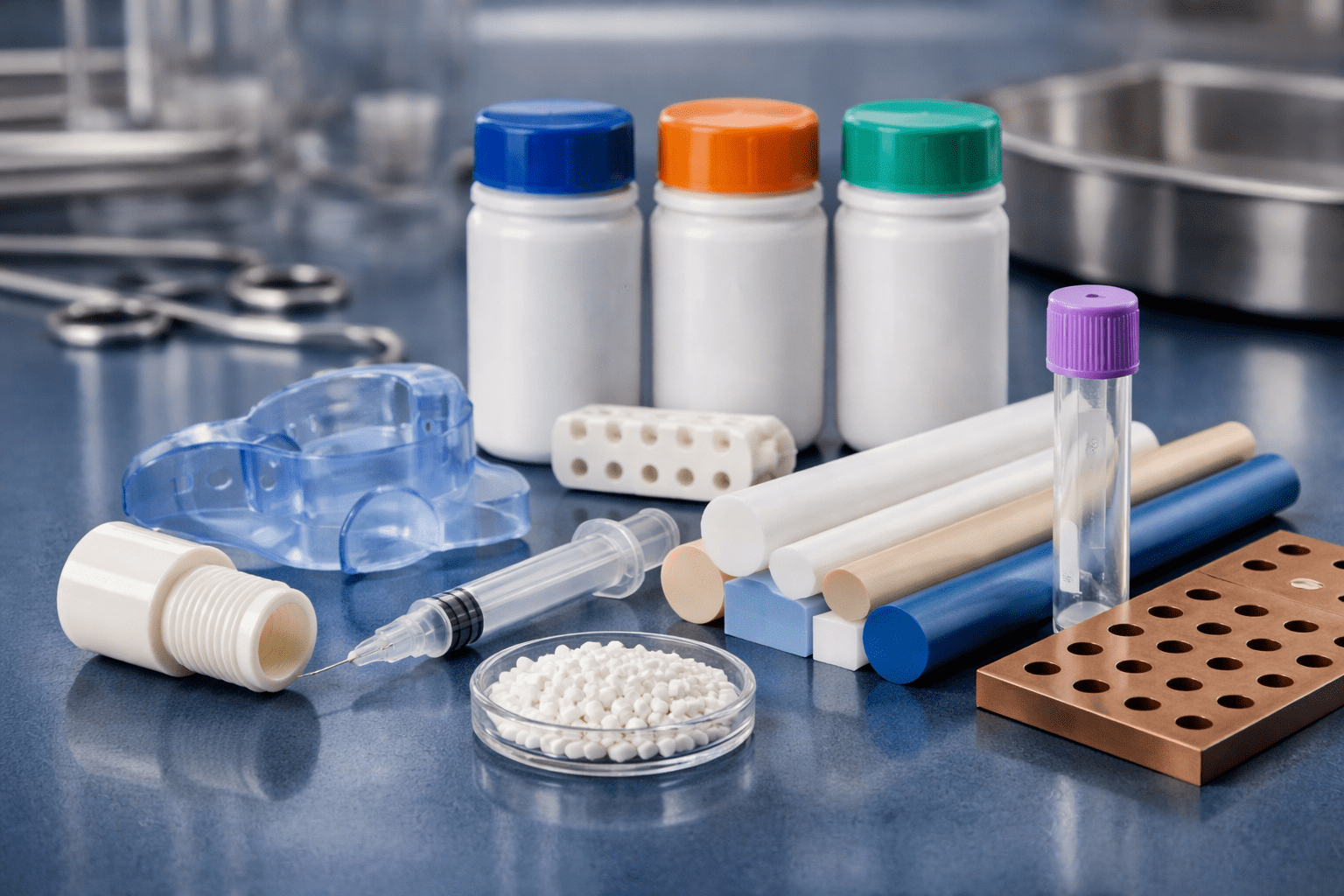
For customers sourcing medical-grade sheet, rod, tube, cut-to-size components, or fabricated parts, the goal is not just to buy plastic. It is to choose a material and supply partner that can support performance, consistency, and compliance expectations over time. Modern Plastics serves a wide range of medical markets and supplies medical-grade polymer stock shapes to the medical industry.
Need help with medical plastic material selection?
Modern Plastics supports customers with medical-grade plastic options, traceability-focused inventory practices, and value-added services for demanding applications. Reach out through the Request a Quote page to discuss your application requirements, material needs, and fabrication goals.
FAQ
What is medical plastic material selection?
Medical plastic material selection is the process of choosing a plastic for a medical application based on performance requirements, sterilization compatibility, chemical resistance, documentation needs, and manufacturing considerations.
Why is sterilization important when selecting medical plastics?
Sterilization method can eliminate otherwise promising materials because steam, gamma radiation, hydrogen peroxide plasma, and EtO each affect plastics differently.
What should be reviewed early in medical device design?
Important early questions include operating temperature, transparency, chemical exposure, load requirements, certification needs, and manufacturing method.
Does Modern Plastics support traceability for medical-grade materials?
Yes. Modern Plastics inventories medical-grade plastics that are lot controlled, individually line marked, and bar-coded for complete material traceability.
0 Comments