

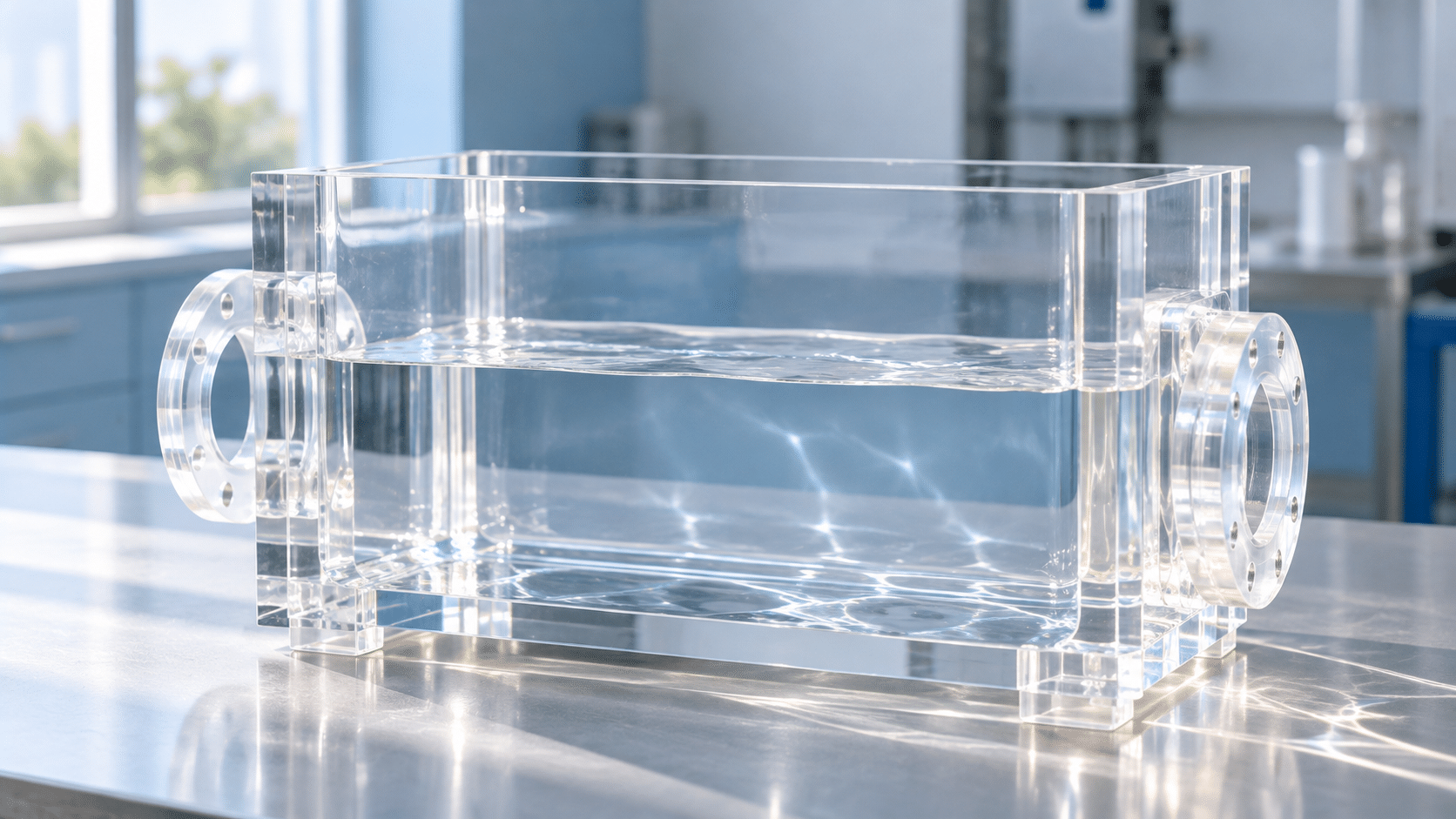
When seeing what is happening inside a fluidics system matters, cast acrylic provides excellent optical clarity while offering the lightweight performance and design flexibility of an engineering thermoplastic.
Cast acrylic is often selected for applications where fluid visibility, transparency, and appearance are important to equipment performance. It can be used for sight windows, viewing ports, reservoirs, tanks, covers, level indicators, inspection windows, and custom machined or fabricated fluidics components.
Modern Plastics supplies cast acrylic sheet and can provide precision-machined and custom-fabricated components for laboratory, medical, analytical, water treatment, industrial, and process fluidics applications.
Quick Answer
Cast acrylic for fluidics applications is useful when clear visual monitoring is the priority. Modern Plastics can support sheet material, fabricated parts and machined components for viewing ports, reservoirs and inspection windows, with compatibility and design reviewed for the application.
What Cast Acrylic Is
Cast acrylic is polymethyl methacrylate, or PMMA, produced by a casting process. Clear cast sheet is often selected for components that let users see a fluid level or inspect equipment. Its transparency and fabrication flexibility are useful for windows, covers and reservoirs, provided the grade and design suit the operating conditions.
Key Properties and Performance Factors
Exceptional Optical Clarity
Cast acrylic provides excellent light transmission, allowing operators to clearly observe fluid levels, flow, and equipment conditions.
Lightweight Performance
Acrylic is significantly lighter than glass, making it easier to handle, fabricate, and incorporate into equipment assemblies.
Good Weatherability
Cast acrylic offers strong resistance to outdoor exposure and UV radiation, making it suitable for certain outdoor fluid-handling equipment.
Good Surface Hardness
Compared with many other transparent plastics, acrylic provides a relatively hard surface that helps maintain appearance and clarity.
Easy to Fabricate and Machine
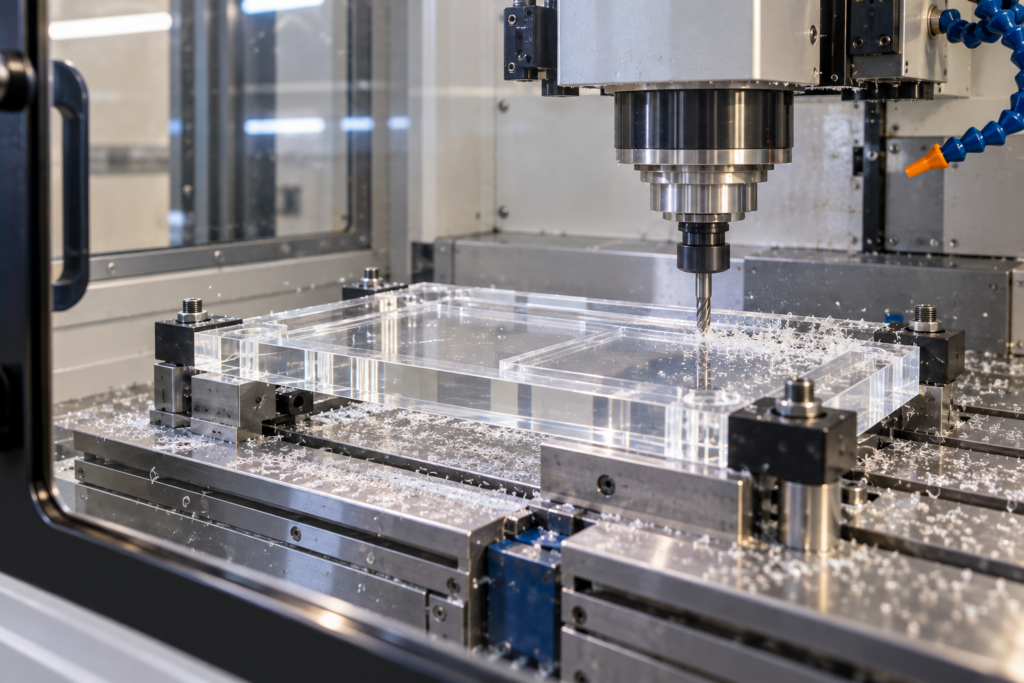
Cast acrylic can be sawed, drilled, routed, turned, and machined into custom components and assemblies.
Design Flexibility
Available in a wide range of thicknesses, sizes, and colors, acrylic gives designers flexibility when developing fluidics equipment.
Common Cast Acrylic Fluidics Uses
Cast acrylic is a strong option when visibility is a key part of the design. It allows operators, technicians, and equipment users to monitor fluid levels, flow, equipment conditions, and process visibility.
Typical cast acrylic fluidics applications may include:
- Sight windows and viewing ports
- Fluid reservoirs
- Tanks and covers
- Flow-monitoring components
- Level indicators
- Laboratory equipment
- Protective equipment covers
- Inspection windows
- Custom fluidics housings
- Machined transparent components
For systems where visual monitoring is important, cast acrylic can offer a clear and lightweight alternative to glass or opaque materials.
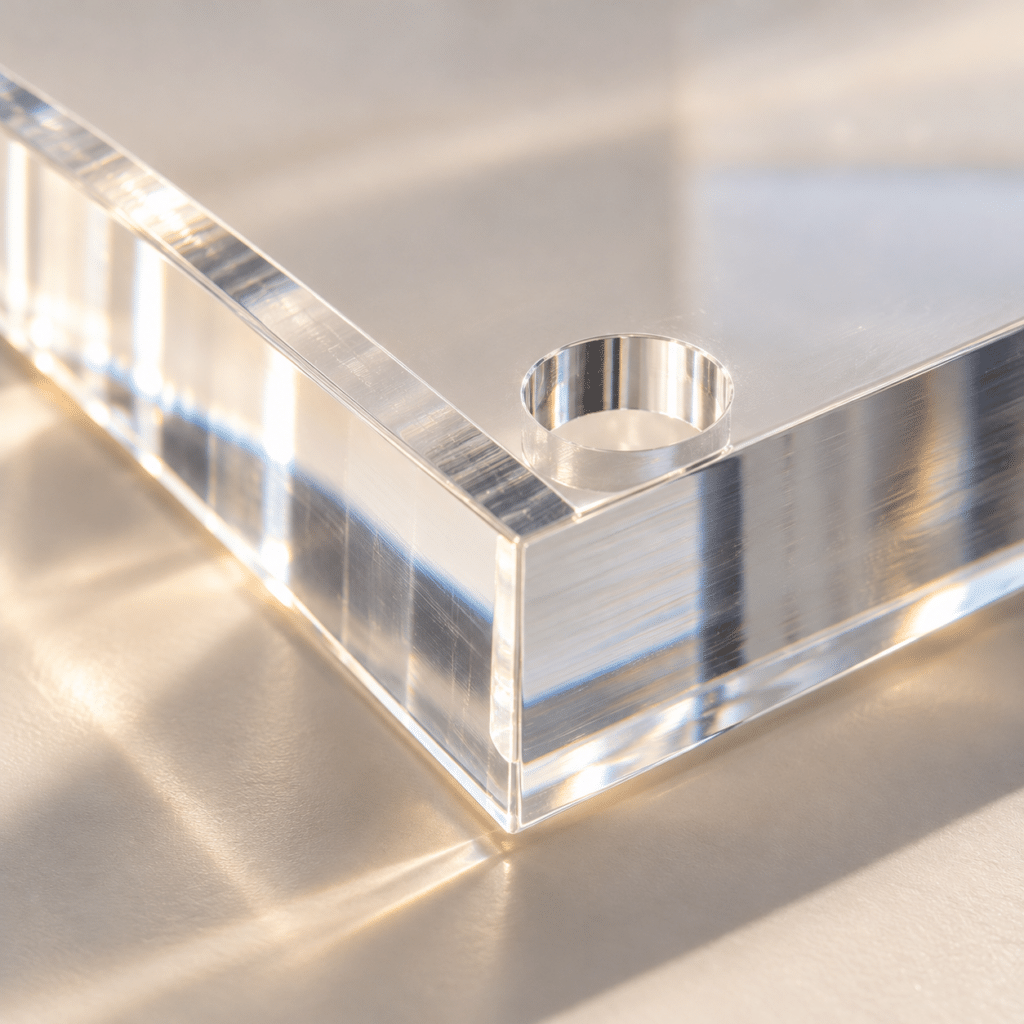
Important Selection Considerations for Cast Acrylic for Fluidics Applications
Modern Plastics can help select the appropriate cast acrylic material based on the application’s requirements, including clarity, thickness, fabrication needs, appearance, chemical exposure, and operating conditions.
Clear Cast Acrylic
Clear cast acrylic is often the preferred choice when maximum visibility and optical clarity are required.
Typical uses may include sight windows, inspection ports, reservoirs, and fluid-level indicators.
Colored or Opaque Acrylic
Colored or opaque acrylic may be used when appearance, light control, shielding, or identification is important.
Typical uses may include equipment covers, guards, housings, and color-coded components.
Specialty Acrylic Grades
Certain acrylic formulations can provide enhanced properties for specific applications, including improved impact resistance or specialized fabrication requirements.
Modern Plastics can help review your application and discuss the appropriate acrylic grade.
Acrylic is not intended for every fluidics application. Its temperature capability and chemical compatibility should be evaluated carefully, especially when the material may be exposed to aggressive solvents, elevated temperatures, or demanding operating conditions.
Modern Plastics can help evaluate whether cast acrylic is appropriate for your fluidics component or whether another engineering plastic may be a better fit.
For wetted parts, evaluate the process fluid and cleaning agents at the intended temperature and exposure duration. Review residual stresses, sealing details and assembly loads as part of the component design. A stock material description does not establish a pressure rating for a reservoir or viewing window.
Review ACRYLITE chemical compatibility alongside the data for your selected stock grade.
Comparisons and Alternatives
Polycarbonate is another transparent option and is often evaluated when impact resistance is a higher priority. Cast acrylic remains useful for applications centered on optical clarity and fabrication. For opaque wetted parts in demanding chemical service, a different polymer may be appropriate after compatibility review.
The right comparison includes the finished component, not just a material property list. Consider fluid exposure, cleaning methods, thickness, mounting arrangement, appearance and replacement needs.
Fabrication, Machining, and Documentation Notes
Our plastic fabrication services support the transition from acrylic sheet to finished components.
We supply cast acrylic sheet and can provide custom-fabricated and precision-machined components to your specifications.
Whether you need a transparent viewing window, custom reservoir, inspection component, protective cover, or complex machined acrylic part, Modern Plastics can help turn your design into a finished component.
Identify critical dimensions, sealing surfaces, finish expectations and inspection requirements on the drawing. Discuss grade identification, lot traceability and material documentation before ordering. Any required cleaning or packaging process should be agreed for the specific project.
Why Modern Plastics
Modern Plastics supports fluidics projects with engineering plastic stock shapes, material-selection guidance and custom machining or fabrication. Sharing the component drawing and operating conditions helps our team discuss suitable material options and production requirements.
Explore our plastic fabrication services or request a quote with your drawing, quantity and documentation needs.
Is Cast Acrylic the Right Material for This Application?
Cast acrylic for fluidics applications is useful when clear visual monitoring is the priority. Modern Plastics can support sheet material, fabricated parts and machined components for viewing ports, reservoirs and inspection windows, with compatibility and design reviewed for the application. Review the component as part of the complete system, including cleaning exposure, sealing and service loads, before finalizing the specification.
Frequently Asked Questions
Why is cast acrylic used in fluidics applications?
Cast acrylic is often used in fluidics applications because it provides excellent optical clarity, lightweight performance, fabrication flexibility, and visual monitoring capability.
What fluidics components can be made from cast acrylic?
Cast acrylic may be used for sight windows, viewing ports, reservoirs, tanks, covers, flow-monitoring components, level indicators, inspection windows, and transparent housings.
Is cast acrylic the same as polycarbonate?
No. Both materials can be transparent, but they have different performance characteristics. Acrylic is known for optical clarity and surface hardness, while polycarbonate is often selected for higher impact resistance.
Can acrylic be machined or fabricated?
Yes. Cast acrylic can be sawed, drilled, routed, turned, machined, and fabricated into custom components and assemblies.
Is acrylic compatible with all fluids?
No. Acrylic is not compatible with every fluid, chemical, or operating environment. Chemical compatibility, temperature, and exposure conditions should be evaluated before selecting acrylic.
Talk to Modern Plastics About Your Application
Need clear visibility into your fluidics system?
Modern Plastics can help select and source the right cast acrylic for your next application, from sheet material to fabricated or precision-machined components.
Contact Modern Plastics to discuss your fluidics application.
0 Comments