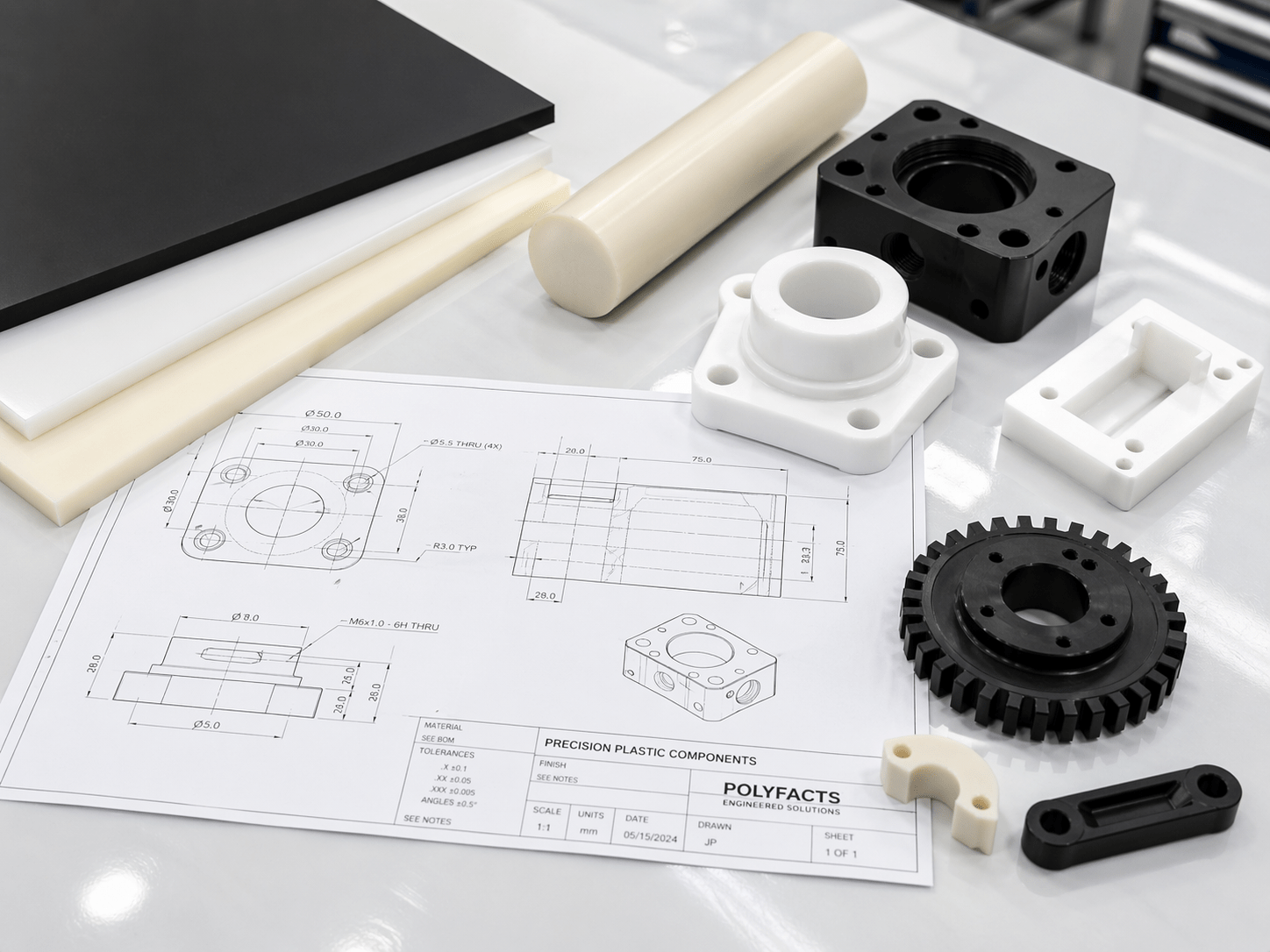
For engineers, buyers, and procurement teams, better specification detail does not just help with pricing. It helps determine whether a project is best suited for fabrication, machining, precision cutting, or a combination of methods. Stronger inputs at the beginning often lead to stronger outcomes later.
Why custom plastic part specifications matter
Many delays in custom plastic part quoting do not happen because a supplier lacks capability. They happen because the part requirements were not defined clearly enough at the start.
That is why custom plastic part specifications matter. They help align the project around:
- material selection
- process fit
- tolerance expectations
- inspection needs
- repeatability
- timing
The clearer the information is upfront, the easier it becomes to move efficiently.
1. Part geometry
Part geometry is one of the first details that influences the production path. A flat panel, simple cover, or formed assembly may point toward fabrication, while more complex geometry may point toward machining.
Geometry helps answer practical questions like:
- Does the part need bending or joining?
- Are there detailed features?
- Is it a simple cut-to-size shape or a precision component?
- Could more than one process be involved?
2. Tolerance expectations
Tolerance expectations can change the entire direction of a quote. A part with loose to moderate tolerances may align well with fabrication, while tighter tolerances often push the discussion toward machining.
This is especially important when a component must fit within a larger assembly or maintain more exact dimensional performance.
3. Material preference
A material name alone is not always enough. Good custom plastic part specifications should make room for material preferences, but also for the requirements behind the choice.
Helpful details may include:
- target material
- application environment
- temperature exposure
- chemical exposure
- wear needs
- electrical properties if relevant
The more clearly the material requirements are described, the easier it is to align the quote with actual performance needs.
For technical material and testing standards that may inform part requirements, teams often reference ASTM International during specification review.
4. Quantity and repeatability
Quantity matters because it affects how the job is evaluated for practicality, repeatability, and production planning.
A one-off prototype may be quoted differently than a repeat production requirement. When repeatability matters, that should be clear from the beginning so the supplier can evaluate the most appropriate path.
5. Documentation and inspection needs
Not every project requires the same level of documentation. Some parts may need a basic quote only. Others may involve traceability, certifications, inspection expectations, or application-driven quality requirements.
When those needs are identified early, it becomes easier to align the quote and production review properly.
When documentation, inspection, and traceability matter, it helps to work with a supplier backed by certified quality systems including ISO 9001:2015, AS9120B, AS9100D, and ISO 13485:2016. It also helps to understand the role of an accredited certification body such as Perry Johnson Registrars.
6. Drawings, files, and part references
A clear drawing or file can speed up quoting dramatically. Even when the project is still early, sharing the best available information helps reduce back-and-forth.
Helpful references can include:
- engineering drawings
- CAD files
- sketches
- sample dimensions
- photos of existing parts
- notes about critical features
These references help define what matters most in the part.
7. Timing and project context
Timing is often overlooked in specification discussions, but it matters. A part needed urgently may require a different review approach than one that is part of a longer planning cycle.
Project context also helps. Is the part for a prototype, a replacement, a repeat production order, or a larger assembly? That information helps clarify how the quote should be approached.
How better specifications improve the process
Clearer custom plastic part specifications help improve:
- quote speed
- quote accuracy
- material alignment
- process selection
- communication
- fewer unnecessary revisions
A stronger starting point usually creates a smoother project path.
A practical checklist before requesting a quote
Before requesting pricing, it helps to review:
- part geometry
- tolerances
- quantity
- preferred material or performance requirements
- drawing or file availability
- environment and exposure conditions
- documentation needs
- target timing
This checklist makes it easier to move from a basic inquiry to a more actionable quote request.
FAQs
What are custom plastic part specifications?
Custom plastic part specifications are the technical and practical details that define how a plastic part should be quoted, reviewed, and produced, including geometry, tolerances, material needs, quantity, and timing.
Why do custom plastic part specifications affect quote accuracy?
They affect quote accuracy because the supplier needs enough detail to match the right material, process, and production approach to the actual requirements of the part.
What details should be included in custom plastic part specifications?
Helpful details include geometry, tolerances, material preference, quantity, drawings, environmental exposure, documentation requirements, and project timing.
Can better custom plastic part specifications reduce delays?
Yes. Better specifications often reduce back-and-forth, improve quote clarity, and help the supplier evaluate the most appropriate production path sooner.
If your team is preparing a new quote request, stronger custom plastic part specifications can make the process faster and more accurate. Modern Plastics can help review project details and align the right material and process with the actual requirements of the part, backed by certified quality systems that support documentation, consistency, and traceability.
0 Comments