

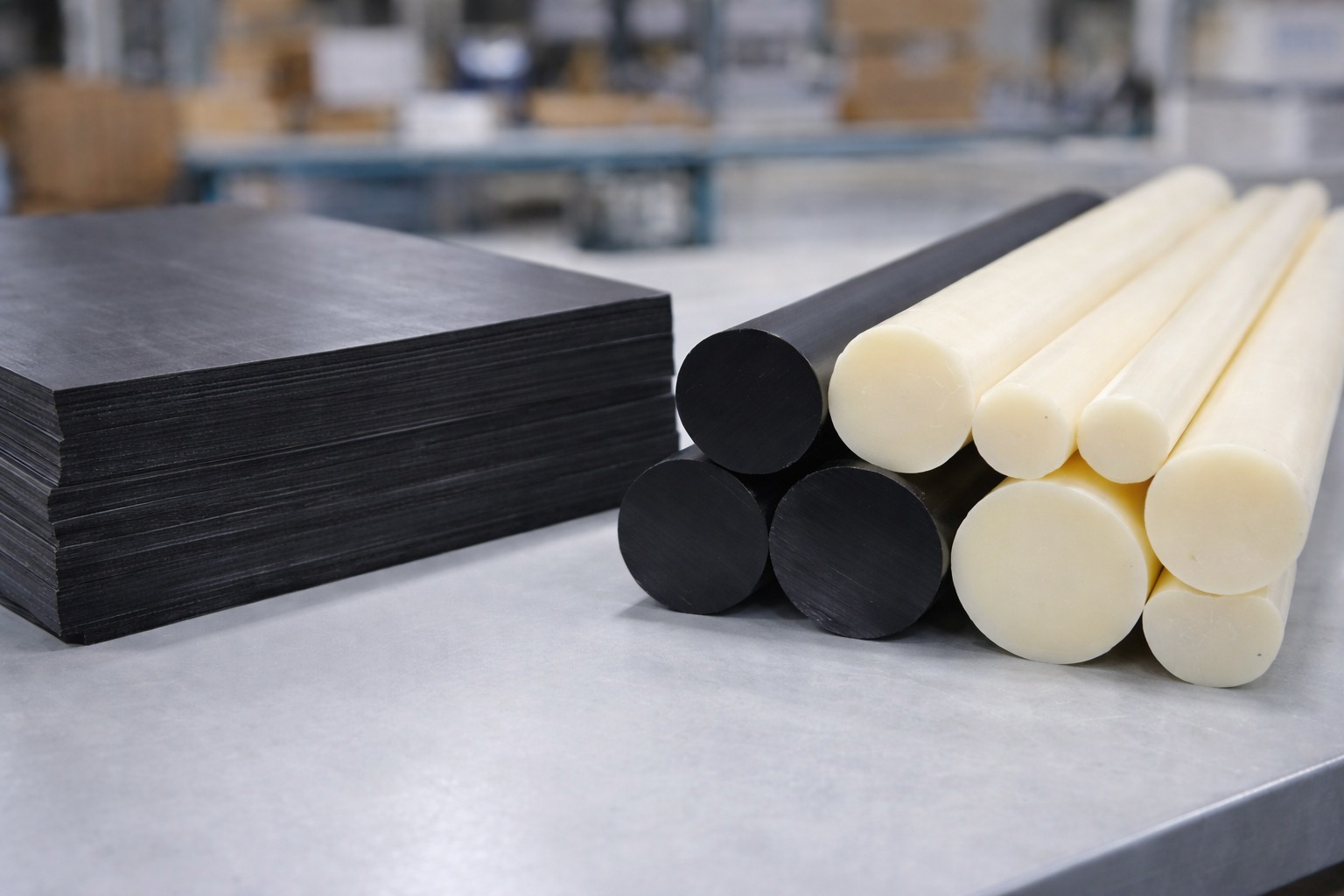
Delrin vs Acetal is one of the most common material questions we hear from engineers and procurement teams—because the names are often used interchangeably, while real-world requirements are not. The right choice depends on grade, environment, tolerance targets, and whether the part sees wear, motion, or chemical cleaning. This guide breaks it down in practical terms and helps you request the correct format—sheet, rod, tube, or cut-to-size blanks—so you can move faster on quotes and repeat orders.
Delrin vs Acetal: What’s the actual difference?
“Acetal” is the broader material family (POM). “Delrin” is a well-known branded version of acetal resin. In day-to-day sourcing, people say either term, but what matters for performance is usually the grade and specification, not the label. For a neutral baseline definition of acetal (POM) terminology, see polyoxymethylene (POM).
For consistent results, confirm:
- Grade (standard vs specialty vs bearing/wear-focused)
- Format (sheet/rod/tube/cut-to-size)
- Environment (temperature + cleaners/chemicals)
- Tolerance and inspection expectations
For a manufacturer overview of the Delrin brand and general properties, reference Delrin® acetal resin.
7 Practical Delrin vs Acetal Differences
Below are 7 Practical Delrin vs Acetal Differences that typically determine what you should order and how you should specify it:
- Grade options drive outcomes
The biggest “difference” is often grade selection. Two acetal materials can behave differently depending on fillers, wear focus, and intended service conditions. - 2) Wear vs structural priorities
If the component slides, guides, or sees repeated motion, wear and friction behavior matter more than general strength—this is where Delrin AF wear-focused grades are often evaluated. - Moisture and stability considerations
Acetal is often chosen for stable performance in humid environments, but stability still varies by grade and geometry. - Chemical/cleaner exposure
If the part sees oils, detergents, alcohols, or other cleaning agents, that exposure should be included in the spec and quote request. - Temperature expectations
Define continuous and peak temperatures. If heat is higher than expected, other polymer families may be more appropriate. - Documentation and compliance needs
If your internal process requires certifications, traceability, or inspection documentation, call it out early so supply aligns to your workflow. - Format availability for repeat orders
Choosing the correct format (sheet/rod/tube/cut-to-size) is a major lever for repeatability and lead time. Many teams standardize by ordering cut-to-size blanks for consistent incoming dimensions.
Grade guidance: what to ask for (without over-specifying)
When teams search Delrin vs Acetal, they’re often really asking: “Which grade should I buy?” A simple approach:
- General-purpose acetal/Delrin: solid choice for fixtures, spacers, and many industrial components
- Wear-focused/bearing grades: better fit when sliding contact and long service life are priorities
- Specialty grades: chosen for specific stability or requirement-driven needs
If your spec calls for a specialty grade, review Delrin 570 grade options and include your tolerance targets and environment details in the request.
If you’re unsure, specify your environment and performance priorities and let the supplier recommend a grade that fits.
Bullet checklist: what to include in your quote request
To speed up quoting and reduce revisions, send:
- Material request (Delrin/acetal + any preferred grade)
- Format: sheet / rod / tube / cut-to-size
- Dimensions (thickness/diameter/length)
- Quantity
- Tolerance targets and inspection needs (if applicable)
- Temperature range (continuous + peak)
- Chemical/cleaner exposure notes
- Documentation needs (certs/traceability if required)
How Modern Plastics supports Delrin/acetal sourcing
Modern Plastics supplies Delrin plastic sheet, rod, and tube and supports cut-to-size blanks for repeat orders through precision cutting and CNC routing. If you need cut-to-size blanks, staged quantities, or consistent incoming dimensions for repeat builds, that can be planned into the order from the start.
FAQs
What is Delrin vs Acetal in simple terms?
Delrin vs Acetal is essentially brand-name acetal (Delrin) versus the broader acetal family (POM). In practice, the most important factor is the grade and spec: environment, wear needs, tolerances, and documentation requirements. Clear specs prevent delays and mismatched expectations.
Is one better for tight tolerances?
Both can work well, but results depend on grade selection, geometry, and how you specify incoming formats. Many teams improve repeatability by ordering cut-to-size blanks with consistent dimensions and then building their process around standardized inputs and inspection targets.
What should I specify to avoid delays?
Include format (sheet/rod/tube/cut-to-size), dimensions, quantity, tolerance targets, temperature range, chemical exposure, and any documentation needs. When these details are included in the first request, quotes are faster and revisions drop significantly.
Can Modern Plastics provide cut-to-size parts?
Yes. Modern Plastics can supply material in sheet, rod, or tube and provide cut-to-size blanks using precision cutting and CNC routing. This helps teams standardize incoming material dimensions, support repeat builds, and reduce handling time during fabrication workflows.
If you’re deciding between Delrin and acetal for an active project, send your dimensions, quantities, tolerance targets, temperature range, and chemical/cleaner exposure with your request. We’ll help confirm the best format—sheet, rod, tube, or cut-to-size blanks—so your team gets dependable supply and repeatable results without unnecessary back-and-forth.
0 Comments