

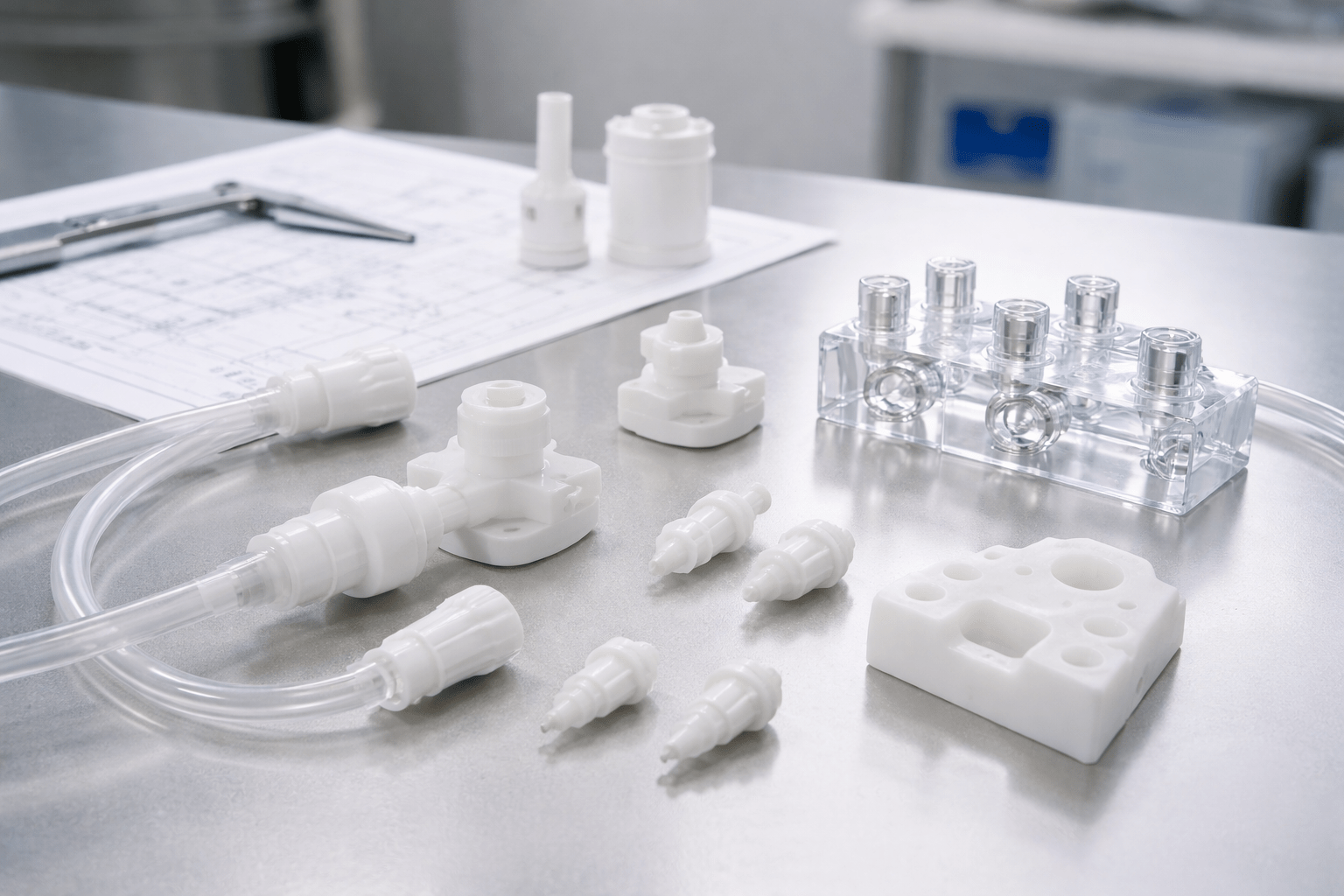
A core benefit to Modern Plastics is our ISO10993 certification, fully traceable certifications, bar coding of all inventory and climate controlled warehousing. Each of the blog post should include the benefits of quality.
Why Medical Device Plastic Materials Matter
Medical applications place high demands on both material and process selection. The medical flyer highlights applications such as surgical instrument handles, dental instrument handles, orthopedic implants, endoscopic housings, sterilization trays, IV and infusion devices, diagnostic systems, and catheters. It also highlights requirements such as repeated sterilization, precise dimensions, high purity, low friction, and resistance to heat, chemicals, and impact.
For that reason, medical device plastic materials are rarely chosen on price alone. They are selected because they help match performance requirements with manufacturability, fabrication needs, and machining expectations.
Engineers reviewing medical requirements often reference the U.S. Food and Drug Administration when evaluating healthcare-related regulatory context.
7 Proven Benefits of Medical Device Plastic Materials
1. Precision for Tight-Tolerance Components
Many medical components need repeatable geometry and dependable fit. Medical device plastic materials support precise dimensions in connectors, housings, fittings, and valve-related components where dimensional consistency matters.
2. Repeated Sterilization Capability
Sterilization performance is a major factor in medical applications. The medical flyer specifically notes that these materials can handle repeated sterilization, making them practical for device components and support equipment used in clinical or lab settings.
3. Lightweight Design Support
Lighter parts can support easier handling, improved ergonomics, and smarter overall product design. That matters in applications such as surgical instrument handles, housings, and mobile or portable medical equipment.
4. Resistance to Harsh Conditions
The medical flyer points to resistance to high temperature, impact, and chemicals, along with the ability to maintain physical properties under thermal, chemical, or electrical stress. That makes medical device plastic materials useful in demanding healthcare environments.
5. Low Friction and Wear Performance
Low-friction performance and excellent wear properties help support moving parts, sliding interfaces, and equipment components where long-term function matters. This is one reason medical plastics continue to be a strong option for parts that see repeated use.
6. High Purity and Regulatory Alignment
High purity and health-regulation alignment are important in healthcare manufacturing and device design. The flyer also calls out antimicrobial options, which can support specific application goals where cleanliness and infection control are part of the broader design discussion.
7. Design Flexibility for Fabrication and Machining
A strong medical material is not only about end-use performance. It also has to work in production. Medical device plastic materials can support fabrication, machining, and precision cutting/CNC routing for custom parts, housings, trays, handles, and device components.
Where fabrication adds value
Fabrication can be a strong fit for trays, housings, guards, and formed or assembled components where geometry is less about intricate internal features and more about finished structure.
Where machining adds value
Machining is often the better fit when a medical application requires detailed features, tighter tolerances, repeatability, and more complex part geometry.
Common Applications for Medical Device Plastic Materials
The medical flyer identifies applications that range from surgical instrument handles and endoscopic housing/eyepieces to dialysis machine housings, respiratory units, laboratory equipment housings, diagnostic systems, feeding tubes, and catheters. That range shows why medical device plastic materials must support many different mechanical, thermal, and cleanliness demands.
Medical Device Plastic Materials Checklist for Buyers
Before requesting a quote, it helps to confirm:
- application and end-use environment
- sterilization expectations
- dimensional tolerances
- purity or regulatory needs
- wear or friction requirements
- whether the part is best fabricated or machined
- whether precision cutting/CNC routing is needed upstream
A clearer requirement set helps align the material and the process sooner.
For material testing and standards context, technical teams often review resources from ASTM International during specification development.
How Modern Plastics Supports Medical Applications
Modern Plastics supports customers with plastics distribution, fabrication, machining, and precision cutting/CNC routing. That matters because medical device plastic materials are rarely a simple stock-material conversation. The right outcome often depends on matching the part requirement to the correct material form, production process, and tolerance expectation.
FAQs
What are medical device plastic materials used for?
Medical device plastic materials are used in applications such as surgical handles, endoscopic housings, sterilization trays, IV devices, diagnostic systems, laboratory housings, and catheter-related components. They are chosen when performance, repeatability, sterilization capability, and precise dimensions need to work together.
Why are plastics used in medical devices and equipment?
Plastics are often used because they can be lightweight, durable, low friction, high purity, and resistant to temperature, chemicals, and impact. In many medical applications, they also support repeated sterilization and help manufacturers design components with practical ergonomics and precise fit.
Do medical plastics work for both fabrication and machining?
Yes. Some medical parts are better suited to fabrication, especially trays, housings, and assembled components. Others are better suited to machining when tighter tolerances, detailed features, or more complex geometry are required. The application and part design usually determine the best path.
How should buyers evaluate medical device plastic materials?
Buyers should start with the application, sterilization demands, dimensional tolerances, purity or regulatory expectations, and whether the component needs fabrication, machining, or precision cutting. A material only performs well when it is matched to the actual use conditions and process requirements.
If your team is evaluating materials for a medical application, Modern Plastics can help review the part requirements and support the project through material distribution, fabrication, machining, and precision cutting/CNC routing. The goal is not just to source plastic, but to align the right material and process with the job.
0 Comments