

Medical grade plastic: what it should mean before you buy
“Medical grade” typically depends on:
- Patient contact vs non-contact
- Compliance requirements (standard(s) your QA team expects)
- Cleaning and sterilization conditions
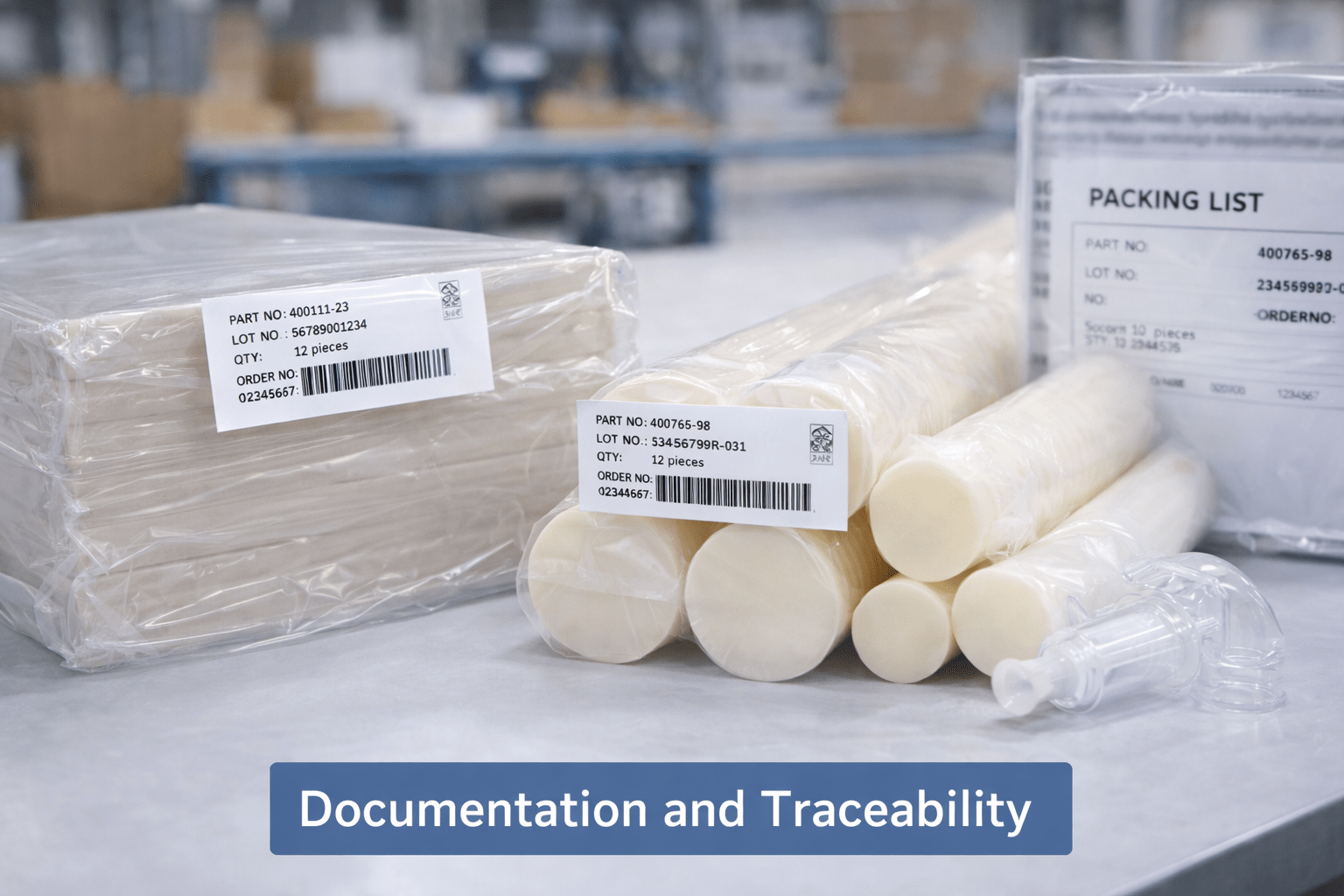
- Documentation/traceability requirements
- Dimensional and inspection expectations
This is why two projects can both request “medical grade” and need completely different materials.
9 Practical Medical Grade Plastic Questions
Use these 9 Practical Medical Grade Plastic Questions to clarify requirements before requesting pricing:
- Is the part patient-contact or non-contact?
This drives biocompatibility expectations and documentation. - Which compliance standard applies (if any)?
Many teams reference ISO 10993 or USP Class VI, but requirements vary by device and program. - What cleaning agents will it see?
Include detergents, alcohols, peroxide-based cleaners, oils, or solvents if relevant. - Will it be sterilized—and how often?
Sterilization method and cycles can influence polymer choice and long-term performance. - What are continuous and peak temperatures?
Temperature range narrows material families quickly and prevents rework. - Is wear or repeated motion involved?
Sliding contact changes what “best” looks like; wear performance may be a primary requirement. - Do you have tolerance and inspection targets?
If inspection is strict, cut-to-size blanks can support repeatability and reduce incoming variability. - Do you need traceability or certifications?
If you need certs, lot/batch tracking, or documentation aligned to internal QA workflows, specify it upfront. - What format do you need: sheet, rod, tube, or cut-to-size?
Format selection affects lead time, repeatability, and ease of handling for fabrication workflows.
Common material families (selection depends on requirements)
People often search “medical grade plastic” when they really need help narrowing options. Depending on environment and compliance needs, teams may evaluate high-performance and engineered plastics across multiple families. The key is not guessing—it’s mapping requirements (temperature, cleaning, contact, documentation) to the right candidate materials and then choosing the correct format for the build.
Bullet checklist: fastest-quote inputs
Include these in your request:
- Patient contact vs non-contact + brief use description
- Compliance requirements (if applicable)
- Cleaning/sterilization method + cycle expectations
- Temperature range (continuous + peak)
- Wear/motion notes (if applicable)
- Format: sheet / rod / tube / cut-to-size
- Dimensions + quantity
- Tolerance targets + inspection requirements
- Documentation needs (certs/traceability if required)
Supply + documentation support for medical programs
Modern Plastics supports medical programs by helping teams source and distribute the correct format and by aligning documentation needs when required. For repeat builds, ordering consistent formats and cut-to-size blanks can help reduce variability, improve handling, and keep procurement and engineering aligned.
FAQs
What does medical grade plastic actually mean?
Medical grade plastic is a requirements-driven term, not a single polymer. It usually reflects patient contact expectations, compliance standards, cleaning/sterilization conditions, and documentation/traceability needs. Defining those inputs early is the fastest way to get accurate quotes and consistent materials.
Do I always need ISO 10993 or USP Class VI?
Not always. Requirements depend on patient contact, device classification, and internal QA expectations. Some projects require specific compliance documentation; others focus on chemical resistance, repeatability, and traceability. Confirm what your program requires before specifying a material family or grade.
How do I request the right format?
Start with how the material will be used: sheet for panels and plates, rod for turned components and blanks, tube for sleeves and spacers, or cut-to-size blanks for standardized incoming dimensions. Include dimensions, quantity, tolerances, and documentation needs to reduce quote revisions.
Can Modern Plastics supply cut-to-size medical plastics?
Yes. Modern Plastics can provide sheet, rod, and tube and support cut-to-size blanks through precision cutting and CNC routing. This is especially helpful for repeat orders where consistent incoming dimensions, staging, and documentation support keep builds moving.
If your team is sourcing medical plastics for an active program, send your format (sheet/rod/tube/cut-to-size), dimensions, quantities, tolerance targets, temperature range, and cleaning/sterilization notes with your quote request. We’ll help match your requirements to the right supply format and documentation approach so you can quote faster and build with confidence.
0 Comments