


Quick Answer
Nylon 6 is often chosen when toughness, impact resistance, and flexibility matter, while Nylon 6/6 is often selected for greater stiffness, strength, heat resistance, and dimensional stability.
What Nylon 6 and Nylon 6/6 Are
Nylon is the common name for a family of polyamide engineering thermoplastics. Nylon 6 and Nylon 6/6 are two of the most widely used nylon materials for industrial plastic stock shapes and machined components. They are commonly supplied as sheet, plate, rod, tube, and fabricated or machined parts.
Nylon 6 is often associated with toughness, impact resistance, and slightly greater flexibility. Nylon 6/6 is often associated with greater stiffness, strength, heat resistance, and dimensional stability. Both materials can be modified through fillers, lubricants, reinforcement, and special grades, so final material selection should always be based on the exact grade and application requirements.
Key Properties and Performance Factors
- Wear and abrasion resistance can make nylon useful for bushings, rollers, guides, and sliding parts.
- Mechanical strength allows nylon to serve in many support, motion, and replacement-part applications.
- Machinability supports prototypes, custom parts, and production components made from stock shapes.
- Noise and vibration reduction can make nylon useful where metal-on-metal contact creates maintenance or operating concerns.
- Moisture absorption is a critical design factor because nylon can change dimensions or properties in humid, wet, or washdown environments.
- Grade selection matters because cast, extruded, glass-filled, oil-filled, heat-stabilized, and other nylon grades can perform differently.
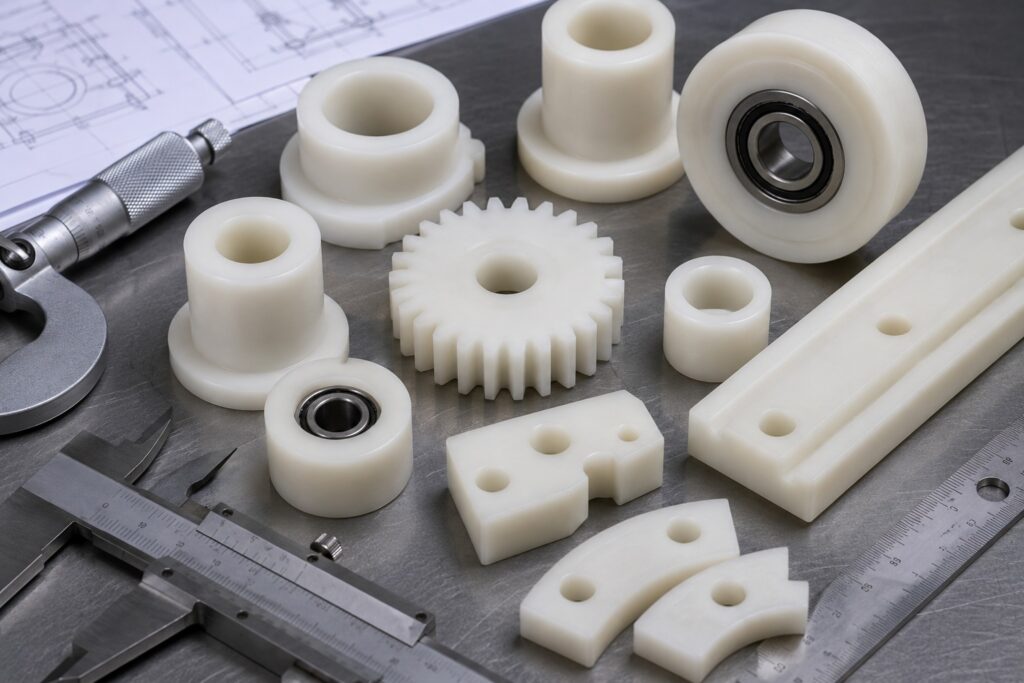
Close-up of nylon bushings, rollers, guide rails, gears, and wear pads used in industrial equipment.
Common Applications in Industrial and OEM Plastic Components
- Bushings, bearings, rollers, and gears
- Wear pads, slide plates, guide rails, and chain guides
- Structural supports, spacers, and machined brackets
- OEM production components and maintenance replacement parts
- Automation, transportation, energy, medical, and industrial equipment parts
The common thread across these applications is not that nylon is a universal material. It is that Nylon 6 and Nylon 6/6 often fit parts where wear resistance, toughness, machinability, corrosion avoidance, and weight reduction are more important than extreme heat, ultra-high purity, or safety-critical structural performance.
Important Selection Considerations for Nylon 6 vs Nylon 6/6
- Nylon 6 is generally more impact-tolerant and slightly more flexible.
- Nylon 6/6 is often preferred when higher stiffness, strength, and heat resistance are important.
- Both materials absorb moisture, so tolerances and operating environment should be reviewed.
- Filled, cast, extruded, and modified grades can behave differently and should not be treated as interchangeable.
Engineers and purchasing teams should also consider total cost of ownership. A material that machines well, holds appropriate tolerances, and performs consistently in the actual environment can reduce maintenance, downtime, premature wear, and rework. A cheaper material that cannot survive the service conditions can cost more over the life of the part.
Comparisons and Alternatives
Nylon 6 is often a practical choice for impact-heavy, cost-sensitive, and wear-intensive parts. Nylon 6/6 may be a better fit when the application requires more stiffness, higher temperature performance, tighter tolerance control, or greater structural support. Acetal may be considered when lower moisture absorption and low friction are priorities, while UHMW may be better for high-abrasion sliding applications.
Fabrication, Machining, and Documentation Notes
Nylon machines well, but design and processing choices still matter. Thin walls, large cross sections, aggressive tolerances, sharp inside corners, or unsupported features can affect final part stability. Moisture conditioning, material grade, and the timing of inspection can also matter for close-tolerance parts.
For production work, the drawing should identify critical dimensions, material grade, finish expectations, holes, slots, countersinks, chamfers, inspection requirements, and any documentation expectations. When a project requires repeatability, the material source, lot traceability, and documentation should be discussed before production begins.
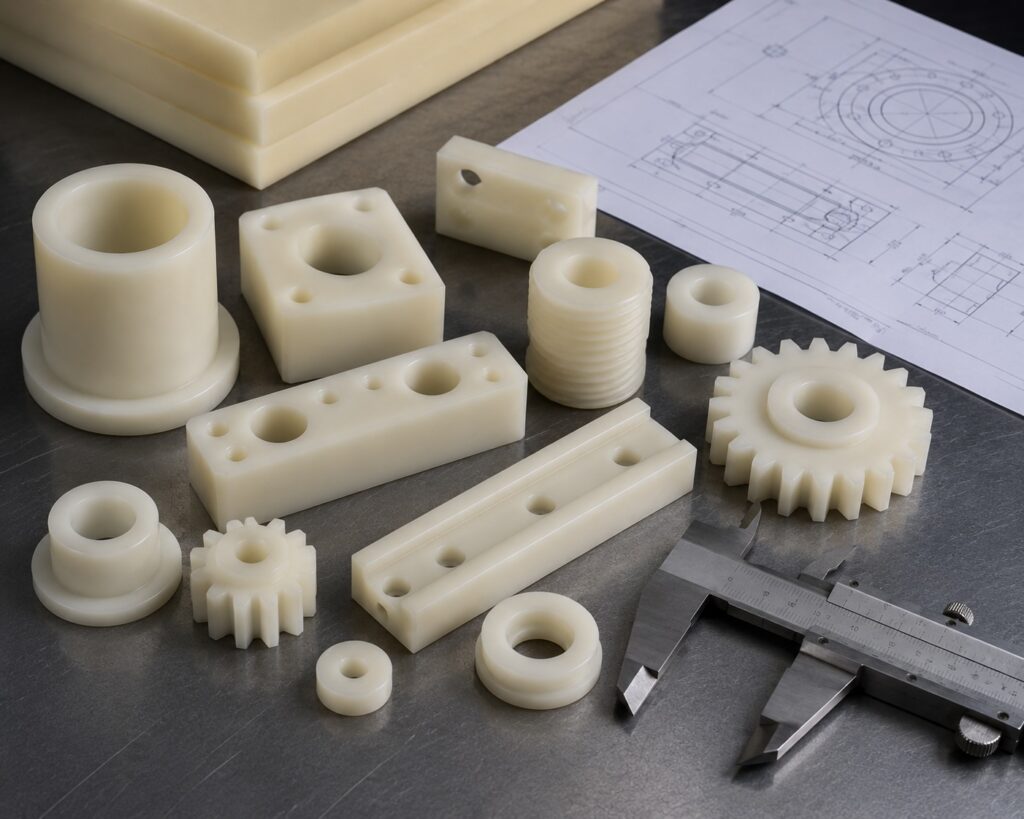
Precision machined nylon components arranged beside calipers and a drawing to show dimensional inspection.
Why Modern Plastics
Modern Plastics supports customers with engineering-grade plastic stock shapes, cut-to-size material, precision plastic machining support, custom fabrication support, and practical material-selection guidance. The team works with demanding markets that may require application fit, tolerance review, documentation awareness, and repeatable sourcing support.
When sourcing Nylon 6 vs Nylon 6/6, Modern Plastics can help review whether Nylon 6, Nylon 6/6, acetal, UHMW, PTFE, PEEK, ULTEM, metals, or another material is the better fit for the application before material is ordered or parts are produced.
Is Nylon the Right Material for Your Application?
Nylon 6 vs Nylon 6/6 can be a strong choice when the application calls for wear resistance, machinability, toughness, corrosion avoidance, and reliable performance in a properly matched environment. It is not the answer for every high-heat, moisture-sensitive, chemical-heavy, ultra-high-purity, or safety-critical condition, but when the service requirements align with the material profile, nylon can be a practical and cost-effective engineering plastic.
Frequently Asked Questions About Nylon 6 vs Nylon 6/6 for Industrial Plastic Components
Where are Nylon 6 vs Nylon 6/6 used?
Nylon 6 vs Nylon 6/6 are commonly used in parts such as bushings, rollers, wear pads, guide rails, spacers, supports, housings, and machined components where wear resistance, toughness, and machinability are important.
What is the difference between Nylon 6 and Nylon 6/6?
Nylon 6 is often chosen for toughness, impact resistance, and flexibility. Nylon 6/6 is often chosen for greater stiffness, strength, heat resistance, and dimensional stability. Exact performance depends on the grade, filler, and operating environment.
What is the biggest design concern with nylon?
Moisture absorption is one of the most important design concerns. Nylon can absorb moisture from the environment, which may affect dimensions and mechanical properties, especially in close-tolerance or wet applications.
Can nylon be machined into custom parts?
Yes. Nylon is widely machined into custom components from sheet, plate, rod, and tube. Drawings, tolerances, finish expectations, and grade requirements should be reviewed before production.
When should another plastic be considered instead of nylon?
Another material may be better when the application involves high heat, aggressive chemicals, ultra-high purity, low moisture absorption requirements, high-pressure sealing, or safety-critical structural loads.
Can Modern Plastics help compare nylon grades?
Yes. Modern Plastics can help review application requirements, compare material options, source stock shapes, and support machining or fabrication needs for nylon and other engineering plastics.
Talk to Modern Plastics About Your Application
Whether you need help choosing the right plastic material, comparing performance properties, improving manufacturability, reviewing documentation requirements, or sourcing stock shapes and fabricated components, the Modern Plastics team is ready to help.
0 Comments