

Quick Answer
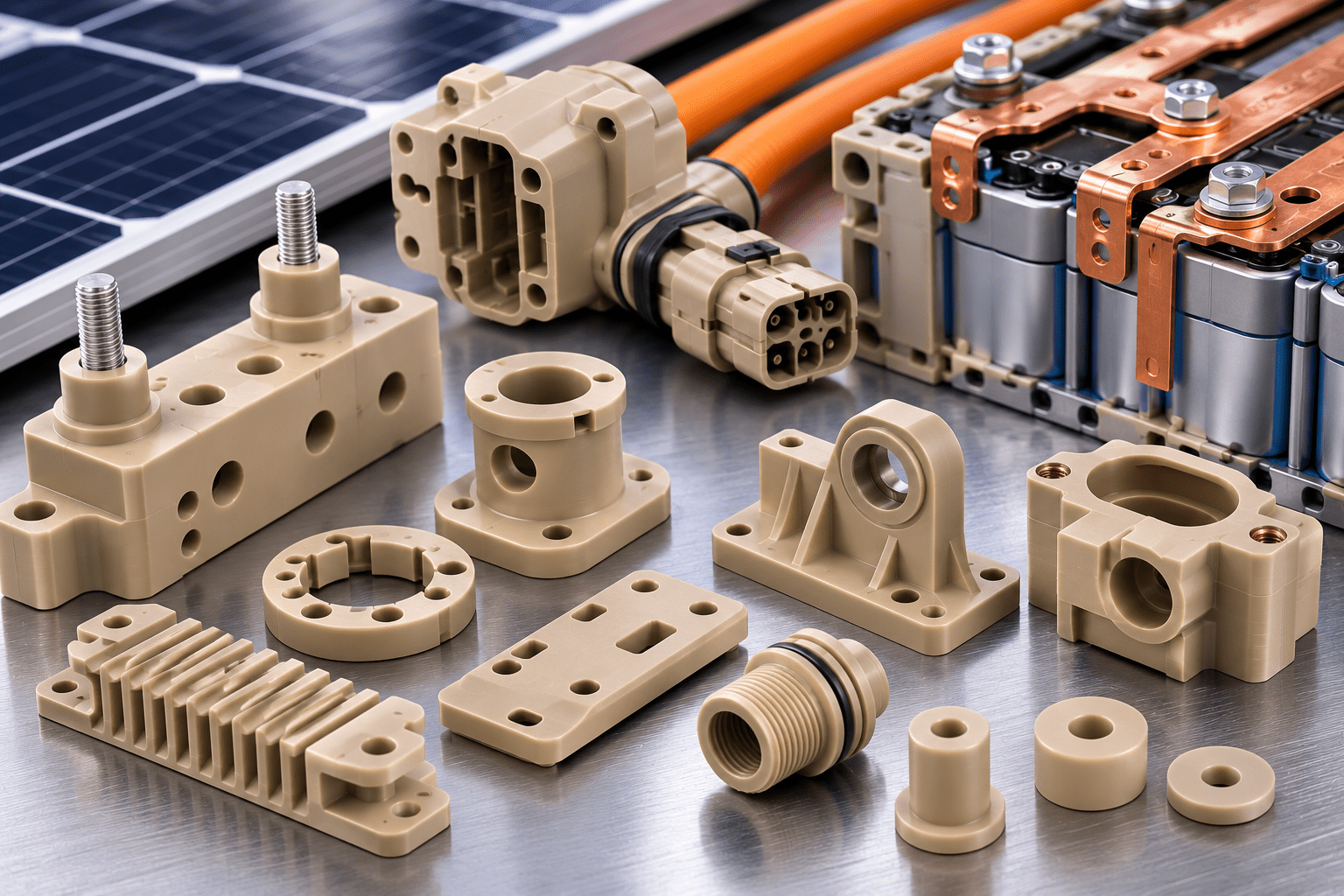
PEEK alternative energy applications include selected battery, EV charging, hydrogen, solar, wind, and power-electronics components where heat resistance, electrical insulation, chemical resistance, and dimensional stability are important. The exact grade and design must be matched to voltage, temperature, flame, chemical, load, and outdoor-exposure requirements.
What PEEK Is
PEEK, or polyetheretherketone, is a semi-crystalline high-performance thermoplastic used in demanding mechanical, thermal, electrical, and chemical environments. It is available in unfilled, glass-filled, carbon-filled, bearing-grade, and application-specific formulations, each with a different balance of stiffness, wear, conductivity, and dimensional behavior.
In alternative energy equipment, PEEK is generally used for specialized support and functional components rather than primary load-bearing structures. Its value is strongest where conventional plastics may not provide enough heat resistance, electrical performance, chemical resistance, or long-term stability.
Key Properties and Performance Factors
- High-temperature capability for power electronics, charging equipment, and thermal-management systems
- Electrical insulation for connectors, busbars, sensors, and high-voltage assemblies
- Chemical resistance for coolants, lubricants, process fluids, and selected hydrogen-system media
- Wear and fatigue resistance for bushings, guides, gears, and repeated-motion components
- Low moisture absorption and dimensional stability across changing environmental conditions
- Lightweight, corrosion-resistant performance compared with selected metal components
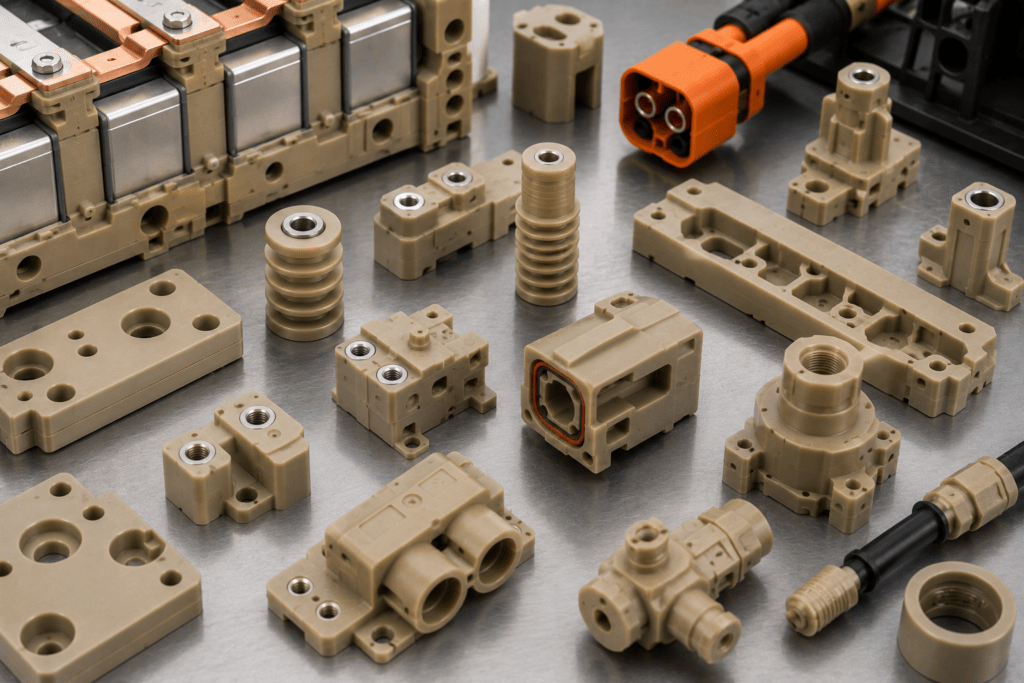
PEEK may support high-temperature electrical insulation and dimensional control in qualified battery and EV assemblies.
Common Applications in Alternative Energy Systems
Battery and Energy Storage Systems
PEEK may be used for busbar insulators, cell spacers, module supports, connector bodies, sensor mounts, thermal-management valve parts, and assembly fixtures. The material and design should be reviewed for voltage, flame, heat, electrolyte exposure, creepage, clearance, and system-level safety requirements.
Electric Vehicle Charging and Power Electronics
High-voltage connectors, insulating supports, cable-management hardware, inverter components, and sensor housings may benefit from PEEK’s electrical insulation and thermal stability. Transportation and electrical safety requirements still govern the final design.
Hydrogen and Fuel-Cell Systems
Selected seals, backup rings, valve supports, electrical insulators, compressor wear parts, and fluid-management components may use PEEK when grade-specific compatibility, pressure, permeation, and temperature requirements are verified.
Solar Energy Equipment
PEEK may support actuator bushings, precision gears, connector components, inverter insulators, sensor mounts, and thermal-system valve parts. Outdoor UV exposure and thermal cycling must be addressed through grade selection or protective design.
Wind Energy Systems
Potential uses include sensor housings, cable supports, bearing cages, bushings, electrical insulators, and hydraulic or lubrication-system components. Load, vibration, fatigue, lightning-protection strategy, and field-service conditions should be reviewed.
Important Selection Considerations for PEEK alternative energy applications
- Confirm the continuous and peak operating temperatures, including localized hot spots.
- Review electrical insulation, dielectric, tracking, creepage, clearance, and flame requirements.
- Verify compatibility with electrolytes, coolants, hydrogen service, lubricants, cleaners, and outdoor moisture.
- Evaluate UV exposure, thermal cycling, vibration, fatigue, pressure, and expected service life.
- Choose unfilled, reinforced, bearing-grade, or other PEEK formulations based on the actual function.
- Confirm documentation, traceability, testing, and customer-specific qualification requirements before ordering.
Engineers and purchasing teams should also consider total cost of ownership. A material and grade that machine predictably, hold appropriate tolerances, and perform consistently in the actual environment can reduce downtime, premature wear, rework, and replacement cost.
Comparisons and Alternatives
PEEK is often compared with PPS, ULTEM™ PEI, PTFE, PVDF, PAI, ceramics, and metals. PPS may offer a lower-cost balance of heat and chemical resistance. ULTEM™ PEI may suit selected electrical and flame-sensitive components. PTFE and PVDF may be preferred for particular chemical or low-friction environments. Metals and composites remain necessary for many structural loads. The best choice depends on the complete operating profile, not one property.
Fabrication, Machining, and Documentation Notes
PEEK machines well, but high material cost makes drawing review and process planning especially important. Critical dimensions, thin walls, bores, threads, surface finish, sealing features, inspection criteria, and the need for stress-relief steps should be identified before production. Filled grades may increase tool wear and behave differently during machining.
Modern Plastics can support PEEK projects with stock-shape sourcing, cut-to-size material, precision machining, fabrication guidance, and documentation planning. Buyers should identify manufacturer, grade, lot traceability, certificates, test reports, and customer-specific quality expectations before material is released.
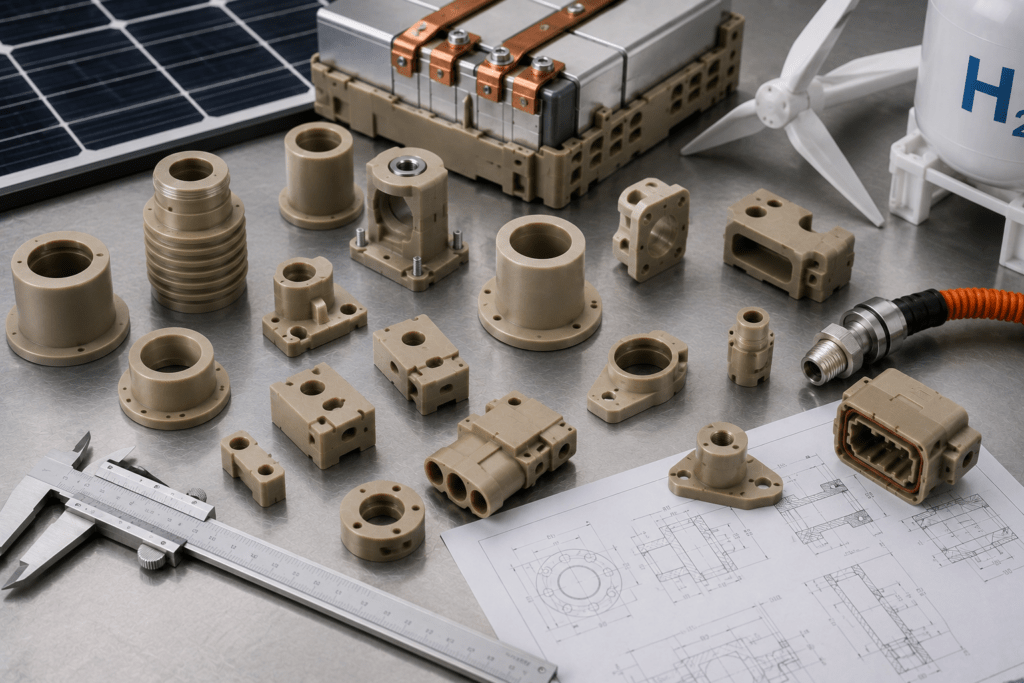
Machined PEEK parts can serve selected solar, wind, hydrogen, and energy-storage systems.
Why Modern Plastics
Modern Plastics supports engineers, procurement teams, OEMs, and fabricators with high-performance plastic stock shapes, material-selection guidance, precision cutting, machining support, fabrication support, and quality documentation. That support helps customers compare PEEK with practical alternatives before committing to a costly specification.
Is PEEK the Right Material for Alternative Energy Components?
PEEK can be a strong choice when an alternative energy component needs a demanding combination of heat resistance, electrical insulation, chemical resistance, wear performance, and dimensional stability. It is not automatically the best choice for every battery, hydrogen, solar, wind, or EV application. The final material should be selected from the real voltage, temperature, chemical, load, flame, environmental, and documentation requirements.
Frequently Asked Questions About PEEK in Alternative Energy Applications
Where is PEEK used in alternative energy systems?
PEEK may be used in battery supports, busbar insulators, high-voltage connectors, EV charging hardware, hydrogen-system valve and seal supports, solar actuator components, wind sensor mounts, and power-electronics hardware.
Is PEEK electrically insulating?
Unfilled PEEK is generally an electrical insulator, but electrical performance depends on grade, fillers, temperature, frequency, moisture, geometry, and contamination. Conductive or carbon-filled grades behave differently.
Can PEEK be used in hydrogen systems?
PEEK may be considered for selected seals, backup rings, valve supports, insulators, and wear components, but pressure, temperature, permeation, chemical compatibility, qualification, and safety requirements must be reviewed for the exact service.
Can PEEK be used outdoors in solar or wind equipment?
PEEK can serve selected outdoor components, but long-term UV exposure, thermal cycling, moisture, wind loading, and service conditions should be evaluated. A stabilized grade or protective design may be required.
Can Modern Plastics help compare PEEK with alternatives?
Yes. Modern Plastics can help compare PEEK with PPS, ULTEM™ PEI, PTFE, PVDF, PAI, metals, and other materials based on the application and documentation requirements.
Talk to Modern Plastics About Your Application
Whether you need help choosing the right plastic material, comparing performance properties, improving manufacturability, reviewing documentation requirements, or sourcing stock shapes and fabricated components, the Modern Plastics team is ready to help.
0 Comments