

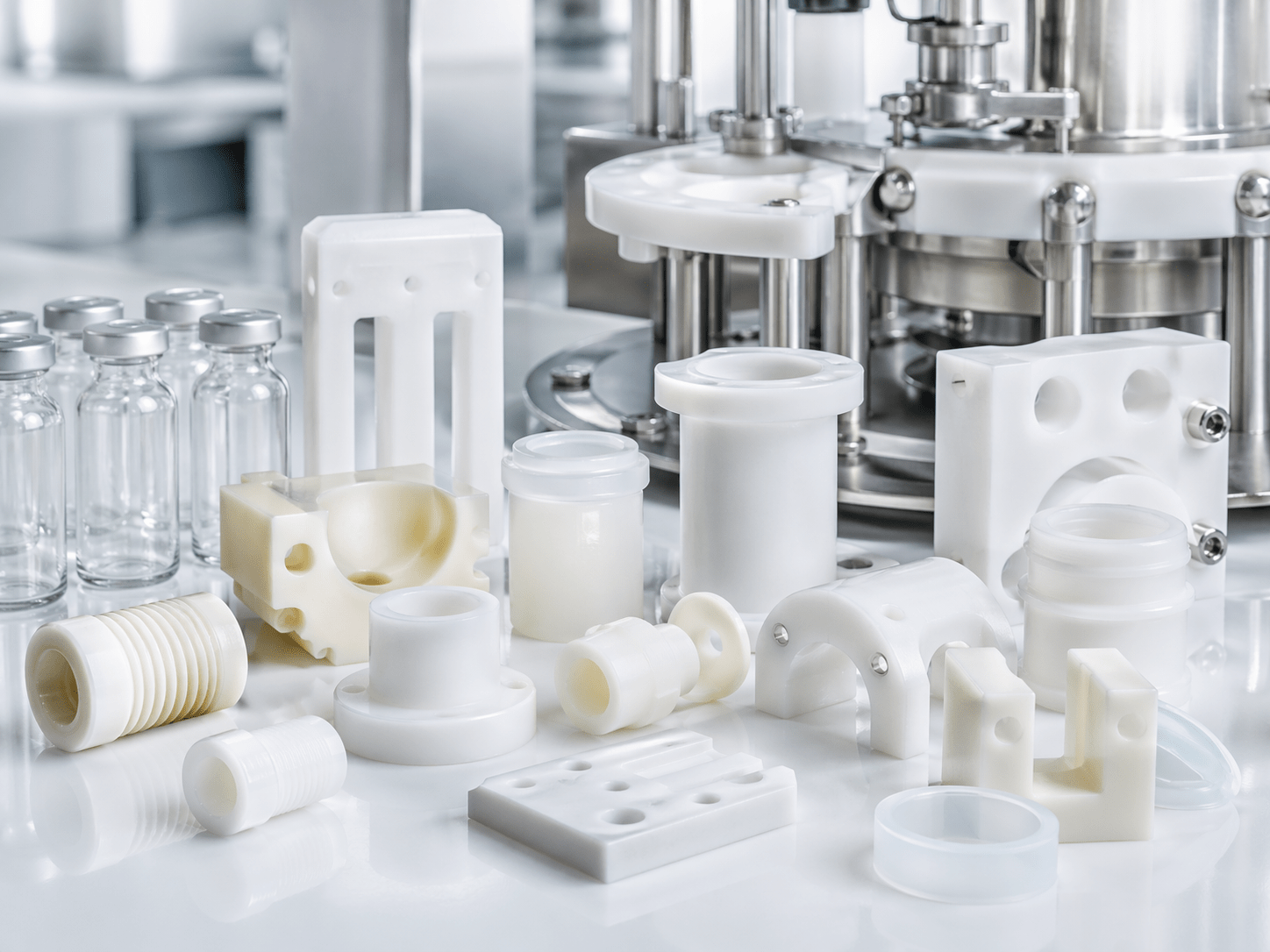
That is why sourcing the right component often requires a closer look at both the plastic material and the way the finished part will be produced. In pharmaceutical environments, small differences in dimensional stability, cleanability, or chemical resistance can have a much larger impact on the overall performance of the part.
For demanding applications, Modern Plastics supports quality and consistency through certified systems including ISO 9001:2015, AS9120B, AS9100D, and ISO 13485:2016.
Why pharmaceutical plastic components require closer review
In pharmaceutical operations, components may be exposed to chemicals, repeated cleaning, moisture, or process environments where reliability matters every day. Depending on the application, teams may need to think beyond a general material name and focus instead on performance expectations, part consistency, and whether fabrication or machining is the better fit.
This is one reason pharmaceutical plastic components are worth evaluating carefully before quoting or production begins.
For broader pharmaceutical industry context, teams often look to ISPE for technical, scientific, and regulatory resources across the pharmaceutical lifecycle.
1. Chemical resistance
Chemical resistance is often one of the first qualities to review in a pharmaceutical plastic component. Even when a part looks simple, it may be exposed to cleaners, solvents, process chemicals, or washdown conditions that can affect long-term performance.
A material that fits the dimensional need of the part but does not hold up chemically may create problems later.
For technical guidance on material standards and performance evaluation, engineers may also reference ASTM International during plastic material review.
Why it matters
Chemical resistance can affect:
- part longevity
- dimensional integrity
- surface condition
- maintenance frequency
- overall suitability for the environment
2. Cleanability
Many pharmaceutical environments require parts that can be cleaned effectively and consistently. That makes cleanability an important consideration when reviewing both material and finished part design.
Features that trap residue or surfaces that are difficult to maintain may create unnecessary operational issues. A cleaner, more practical part design often supports better day-to-day use.
3. Dimensional stability
Dimensional stability matters when a plastic part must maintain fit, shape, and repeatable performance over time. If a part shifts too much under environmental conditions, it may affect assembly fit or operational consistency.
Why it matters
Stable dimensions can help support:
- better fit in equipment
- repeatable installation
- consistent performance
- fewer downstream adjustments
4. Consistency from part to part
For pharmaceutical programs, repeatability often matters just as much as raw material performance. When the same component is needed across multiple runs or repeat orders, consistency becomes part of the value.
This includes consistency in:
- material quality
- finished dimensions
- feature placement
- overall part readiness
That focus on repeatability is supported by certified quality systems including ISO 9001:2015, AS9120B, AS9100D, and ISO 13485:2016.
5. Finished part quality
The right material alone does not guarantee a successful result. Finished part quality matters too.
A pharmaceutical plastic component may require accurate cutting, careful fabrication, precise machining, or a combination of those processes depending on the design. Edge quality, dimensional control, and repeatability all contribute to how well the part performs in its intended application.
6. Process fit: fabrication, machining, or both
Some pharmaceutical plastic components are best supported through fabrication, especially when the need involves formed pieces, simple guards, covers, supports, or assembled components.
Others are better suited for machining when they require:
- tighter tolerances
- more detailed features
- drilled or milled geometry
- more exact dimensional control
In some projects, both fabrication and machining may be part of the solution.
7. Application-specific requirements
No two pharmaceutical applications are exactly alike. Some parts may prioritize chemical resistance. Others may require closer dimensional control, better cleanability, or a more complex finished geometry.
That is why the best review starts with the actual application:
- Where will the part be used?
- What will it be exposed to?
- How precise does it need to be?
- Does it need fabrication, machining, or both?
- Is this a one-time need or a repeat order?
These details help shape a more practical sourcing decision.
Why early details improve results
The earlier a team defines part requirements, the easier it becomes to align the material and the production method with the application.
Helpful details often include:
- dimensions
- drawings
- quantities
- tolerance expectations
- environment
- preferred material
- timeline
- documentation needs
The more complete the project picture is at the beginning, the easier it is to move toward a better outcome.
FAQs
What are pharmaceutical plastic components?
Pharmaceutical plastic components are plastic parts used in pharmaceutical-related environments where consistency, cleanability, chemical resistance, and dependable performance may be important.
Why is chemical resistance important in pharmaceutical plastic components?
Chemical resistance matters because many pharmaceutical environments involve exposure to cleaners, solvents, or process chemicals that can affect part performance over time.
Are pharmaceutical plastic components fabricated or machined?
They can be fabricated, machined, or both depending on the geometry, tolerance requirements, and intended function of the part.
What should be reviewed before sourcing pharmaceutical plastic components?
It is helpful to review chemical exposure, cleanability, dimensional needs, geometry, repeatability, and whether fabrication or machining is the best fit.
If your team is reviewing pharmaceutical plastic components for a new or repeat application, Modern Plastics can help evaluate the material, process, and finished part requirements so the solution better matches how the component will actually be used. That support is backed by certified quality systems including ISO 9001:2015, AS9120B, AS9100D, and ISO 13485:2016. Visit our Request a Quote page for a quick and accurate custom quote for your next project.
0 Comments