

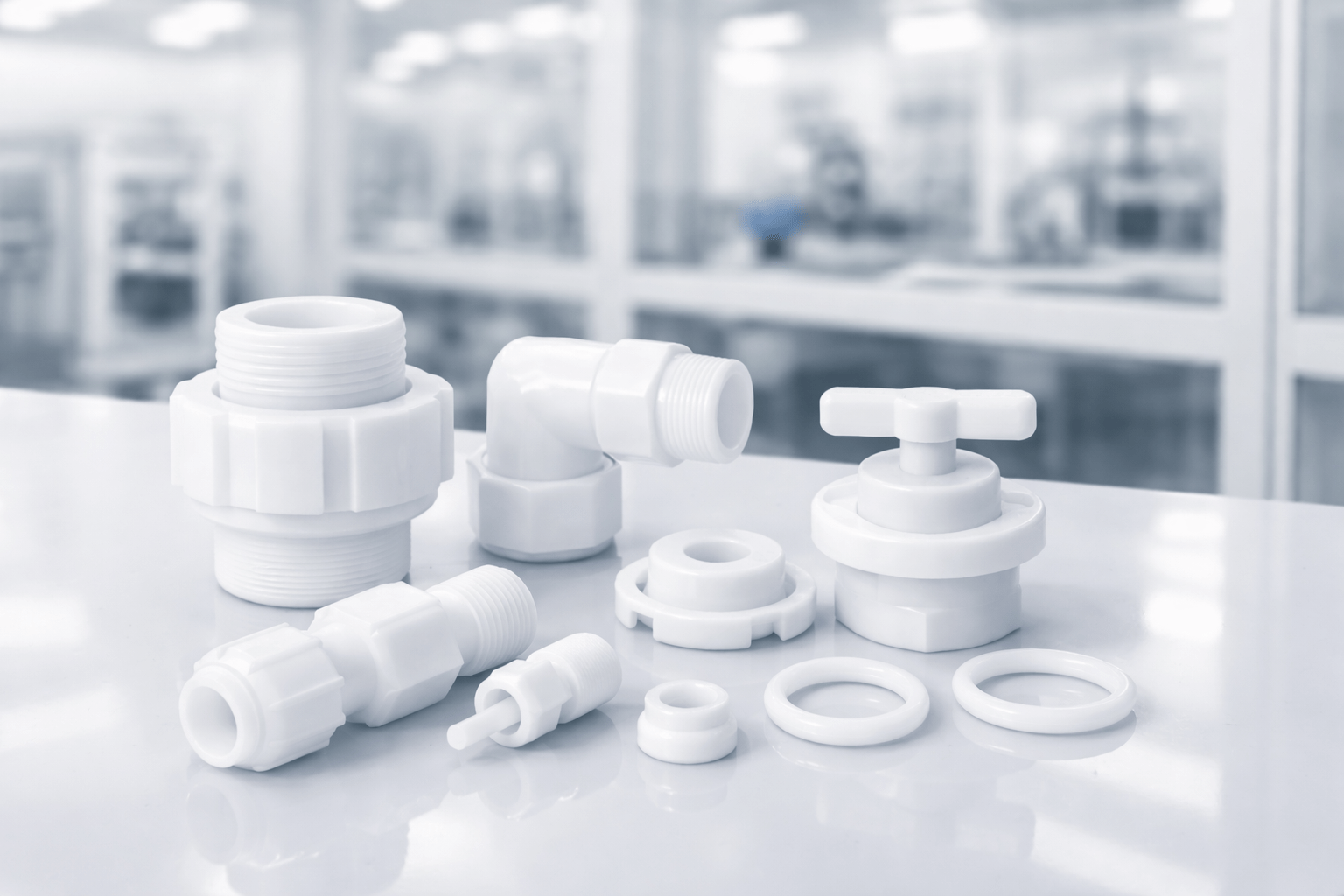
Why Semiconductor Plastic Materials Matter
The semiconductor flyer identifies applications such as semiconductor device test sockets, integrated circuit chip carriers, high-purity piping systems, semiconductor trays and boxes, wet benches, static-control components, electrical insulators, wafer-handling parts, and microelectronics-related uses. It also highlights low outgassing, static-dissipative properties, corrosion resistance, low particle generation, and minimal contamination to flow.
That is why semiconductor plastic materials are chosen so deliberately. In these environments, both the material and the process influence performance. Teams working in electronics and chip-related production often reference resources from SEMI for broader semiconductor industry context.
6 Practical Roles for Semiconductor Plastic Materials
1. High-Purity Fluid Handling
One of the clearest roles for semiconductor plastic materials is in high-purity piping systems and related fluid-handling components such as valves, fittings, pipe, tubing, and filtration elements. These parts need to support flow while minimizing contamination risk.
2. Chemical Resistance in Aggressive Environments
The semiconductor flyer points to resistance to corrosive acids and inertness to common process chemicals. That matters in wet processing, chemical transfer, tanks, and other environments where material degradation can quickly become a performance problem.
3. Static Control and Electrical Insulation
Some applications require static-dissipative performance, while others need electrical insulating properties. Semiconductor plastic materials support both kinds of roles depending on the application, especially where electronics, test, or process stability is involved.
4. Wafer Handling and Clean Part Interaction
Wafer handling parts, trays, and boxes are all called out in the flyer. In these applications, part cleanliness, low particle generation, and dimensional consistency matter just as much as basic durability.
5. Heat and Process Stability
The flyer also notes performance in extreme heat and nonflammable behavior. In semiconductor settings, that kind of stability can influence how parts are evaluated for process-facing roles, especially when temperature and cleanliness requirements overlap.
6. Fabricated and Machined Component Support
The final role is manufacturing practicality. Semiconductor plastic materials must often move from stock shape to a usable part through fabrication, machining, or precision cutting/CNC routing.
Where fabrication supports semiconductor work
Fabrication can be valuable for larger assemblies, guards, tanks, benches, and joined components where the overall structure matters as much as the material.
Where machining supports semiconductor work
Machining is often the stronger choice for sockets, carriers, fittings, and precision parts that require tighter tolerances or more complex features.
Semiconductor Plastic Materials in Real Applications
The semiconductor flyer names tanks, device test sockets, circuit boards, high-temperature components, chip carriers, wet benches, electrical insulators, wafer handling parts, and waste transfer lines. That range shows why semiconductor plastic materials need to support purity, chemistry, wear, and process compatibility all at once.
Checklist for Evaluating Semiconductor Plastic Materials
Before specifying a material, it helps to confirm:
- chemical exposure
- purity expectations
- static or insulating requirements
- particle-generation concerns
- heat exposure
- tolerance and geometry needs
- whether the part is best fabricated or machined
A more complete requirement set helps shorten the path to the right material and process.
For material testing and standards context, engineers often review information from ASTM International when refining technical specifications.
How Modern Plastics Supports Semiconductor Customers
Modern Plastics supports semiconductor customers with plastics distribution, fabrication, machining, and precision cutting/CNC routing. Because semiconductor plastic materials are often selected for very specific reasons, the best results come from matching the application demands to the right material form and manufacturing path from the start.
FAQs
What are semiconductor plastic materials used for?
Semiconductor plastic materials are used in applications such as high-purity piping systems, device test sockets, chip carriers, trays, boxes, wet benches, electrical insulators, wafer handling parts, and static-control components. These applications require performance that goes beyond general-purpose material selection.
Why are plastics used in semiconductor manufacturing?
They are used because they can offer chemical resistance, low outgassing, low particle generation, static-dissipative or insulating properties, and good performance in high-purity environments. In semiconductor manufacturing, those traits help support both process stability and part cleanliness.
Do semiconductor applications require fabrication or machining?
They can require either one or both. Larger structural or joined components may lean toward fabrication, while tighter-tolerance sockets, carriers, fittings, and detailed parts are often better suited for machining. The application geometry and performance demands determine the best route.
How should buyers specify semiconductor plastic materials?
Buyers should define the chemical environment, purity expectations, static needs, temperature exposure, contamination sensitivity, and tolerance requirements. Those details help align the material with the correct fabrication, machining, or precision cutting process and reduce the risk of choosing an unsuitable solution.
If your team is evaluating materials for semiconductor-related applications, Modern Plastics can help review the part and process requirements and support the job through plastics distribution, fabrication, machining, and precision cutting/CNC routing. Early alignment between material and application usually leads to better performance and fewer downstream issues.
0 Comments