

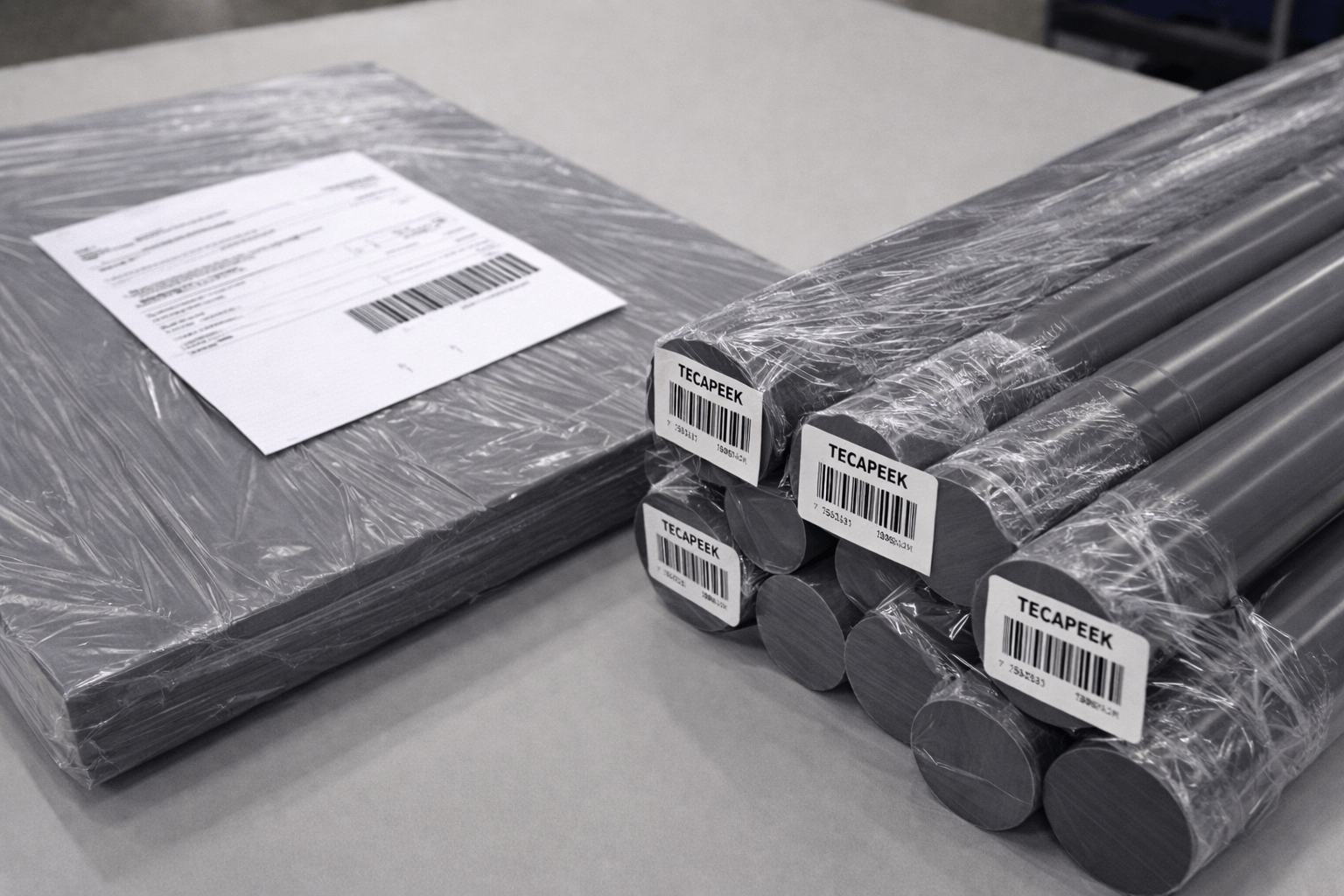
TECAPEEK is often evaluated when teams need a high-performance polymer for demanding environments and repeatable builds. But “TECAPEEK” alone isn’t enough to quote accurately—performance depends on grade, exposure conditions, and how you specify the supply format (sheet, rod, tube, or cut-to-size blanks). This guide outlines 7 practical spec tips and includes a copy/paste RFQ checklist so engineering, quality, and procurement can align early and keep projects moving with fewer revisions.
TECAPEEK: what to clarify before you request pricing
High-performance programs move fastest when a request includes the details that impact supply, handling, and repeatability: temperature range (continuous + peak), exposure conditions (cleaners/chemicals if relevant), tolerance targets/inspection expectations (if applicable), documentation needs (certs/traceability if required), and format (sheet/rod/tube/cut-to-size). Missing inputs often trigger a revision cycle—especially on repeat orders or documentation-driven programs.
For a neutral baseline definition of the polymer, see polyether ether ketone (PEEK).
For manufacturer-grade information on this product family, reference TECAPEEK.
Why grade clarity matters
Many TECAPEEK requests include a material family name but not the performance driver. The faster you clarify the primary requirement (heat, stiffness, exposure, repeatability), the faster the quote process becomes.
7 Practical TECAPEEK Spec Tips
- Start with the real environment, not the material name. Define continuous/peak temperature and exposure conditions first so requirements are clear.
- Confirm whether your application is structural, wear, or exposure-driven. Different priorities change which grades are typically evaluated. For reinforced applications, teams may evaluate TECAPEEK GF30 depending on performance requirements and the operating environment. For reinforced applications, teams may evaluate TECAPEEK GF30 depending on performance requirements and the operating environment.
- Include documentation expectations up front. If your program needs certs, traceability, labeling, or records retention, include it in the initial RFQ.
- Specify the supply format early. Sheet, rod, tube, or cut-to-size blanks—format affects lead time, repeatability, and receiving workflows.
- Add tolerance targets when they matter. If fit or inspection thresholds are critical, include tolerance targets in the first message to avoid re-quotes.
- Plan for repeat ordering. If the part will be reordered, request consistent incoming formats and staged quantities to support repeatability.
- Align your teams with a single RFQ checklist. Standardizing inputs prevents missing details and reduces back-and-forth between engineering, procurement, and quality.
Why format choice matters for repeat builds
For high-performance programs, format is not a small detail—it’s a workflow choice. Teams often reduce variability by ordering cut-to-size blanks so incoming dimensions are standardized before fabrication. That can support more predictable receiving, clearer inspection, and repeatable staging across orders.
Bullet checklist: copy/paste RFQ inputs
- Material request: TECAPEEK + grade (if known)
- Format: sheet / rod / tube / cut-to-size blanks
- Dimensions + quantity
- Tolerance targets + inspection expectations (if applicable)
- Temperature range (continuous + peak)
- Chemical/cleaner exposure notes (if applicable)
- Documentation needs (certs/traceability if required)
How Modern Plastics supports high-performance sourcing
Modern Plastics supplies TECAPEEK in sheet, rod, tube, and cut-to-size blanks, supported by precision cutting and CNC routing for repeat orders.
When the spec requires a defined variant, review TECAPEEK VF and include your tolerance targets and documentation requirements in the RFQ so the quote aligns cleanly with your workflow.
How to use this guide internally
Use the 7 tips as a pre-RFQ checklist, then paste the bullet checklist into your RFQ template. Consistent requests are the fastest way to reduce re-quotes and keep repeat orders predictable.
FAQs
What is TECAPEEK used for?
TECAPEEK is used in demanding applications where teams need high-performance polymer options and a repeatable supply. The right choice depends on temperature range, exposure conditions, tolerance targets, and whether documentation or traceability is required. Clear specs help reduce RFQ revisions and speed quoting.
Is TECAPEEK the same as PEEK?
TECAPEEK is a branded material family associated with PEEK-based performance. In sourcing, grade, and application details matter as much as the name. For accurate quoting, include environment, format (sheet/rod/tube/cut-to-size), and any documentation requirements tied to quality and receiving.
What should I include in an RFQ to avoid delays?
Include format, dimensions, quantity, tolerance targets, and temperature/exposure details. If your program requires certs or traceability, include those requirements up front. Standardizing these inputs reduces re-quotes and supports smoother receiving and repeat ordering.
Can TECAPEEK be supplied as cut-to-size blanks?
Yes—many teams request cut-to-size blanks to standardize incoming dimensions and support repeat builds. This can reduce variation and improve predictability across fabrication workflows, especially when inspection expectations and documentation are part of the program.
If you’re evaluating TECAPEEK for an active program, send your format (sheet/rod/tube/cut-to-size), dimensions, quantities, tolerance targets, temperature range, and any chemical/cleaner exposure details with your request. We’ll help align format and documentation expectations so your team can quote faster and keep repeat orders consistent.
0 Comments