Valox plastic is often chosen when teams need consistent performance, dimensional stability, and a clear path to repeat ordering—especially for parts tied to electrical, industrial, and documentation-driven programs. The challenge is that “Valox” gets used as shorthand, while the real outcome depends on the grade, environment, and how you specify format (sheet, rod, tube, or cut-to-size blanks). This guide gives you 7 practical selection tips and a copy/paste RFQ checklist so procurement and engineering can move faster with fewer revisions.
Valox plastic: what it is and how it’s used
Valox is commonly associated with PBT-based engineering plastics used in demanding industrial applications. For a neutral baseline definition of the polymer family, see polybutylene terephthalate (PBT).
In real sourcing workflows, performance depends on the grade and how the material will be exposed (heat, moisture, cleaning agents, electrical environments, etc.). If your program requires documentation, lot control, or repeatability, clarify those expectations early so your supplier can align supply and paperwork. For an authoritative manufacturer overview, reference VALOX™ resins.
What matters most in the first request
Instead of starting with a broad “Valox” request, start with: environment + performance priorities + format. That combination reduces back-and-forth and helps avoid quoting delays.
7 Practical Valox Plastic Selection Tips
- Confirm the environment before selecting a grade. Temperature range, humidity, and exposure conditions often determine which grade is appropriate.
- Define the primary requirement (stability, insulation, durability, etc.). “Best” depends on what you’re optimizing for.
- Flag any documentation requirements up front. If certifications, traceability, labeling, or records retention are part of your workflow, include it in the RFQ from day one.
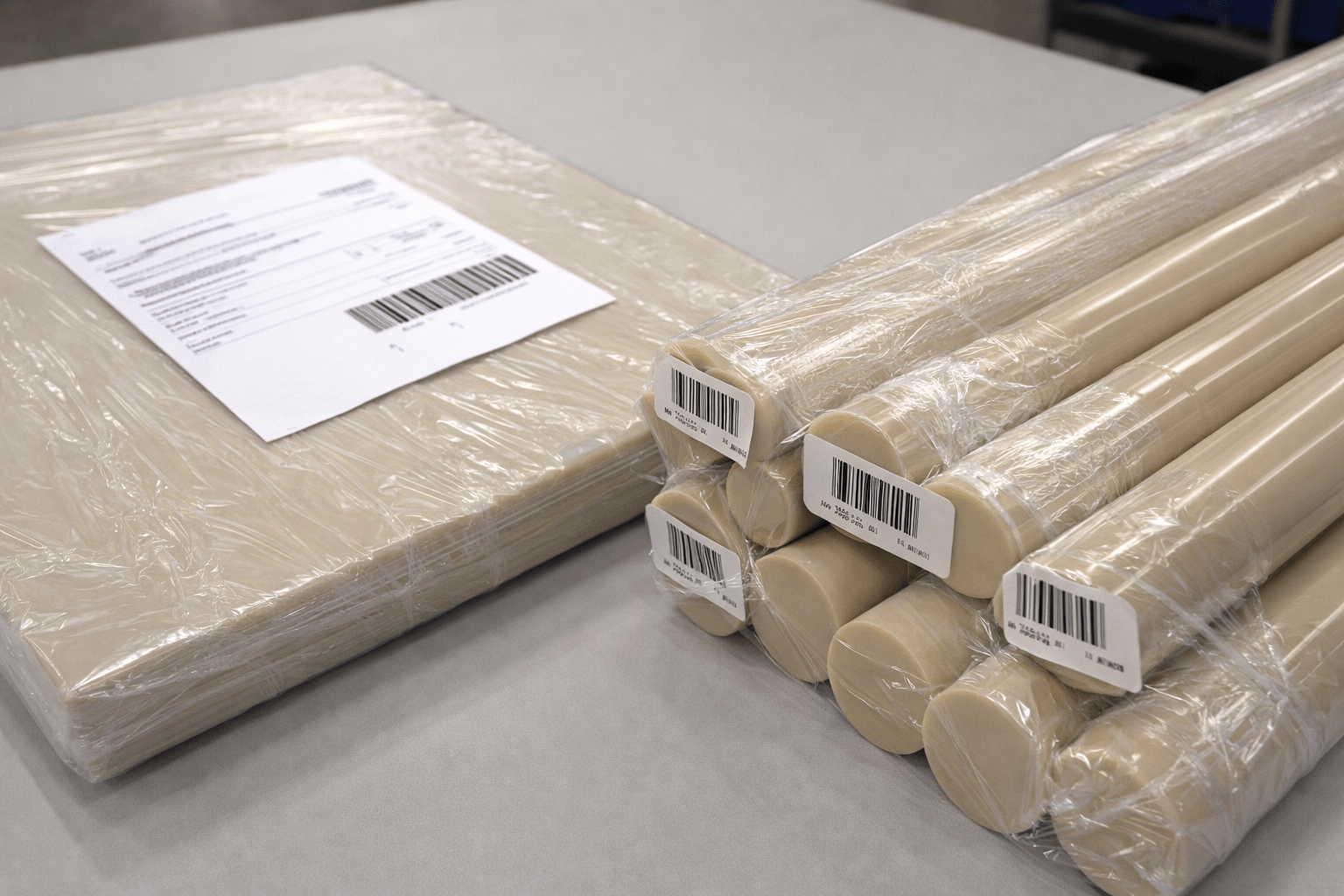
- Specify the format clearly. Sheet, rod, tube, or cut-to-size blanks—format affects lead time, pricing, and repeatability.
- Include tolerance targets when they matter. If your build depends on inspection thresholds or consistent fit, tolerance targets belong in the first message.
- Call out any cleaning agents or chemical exposure. Even mild exposure can matter over time—include cleaning/chemical notes to prevent premature failures.
- Plan for repeat orders, not just prototypes. If this material will be reordered, request consistent formats and staged quantities to support repeatability and reduce re-quotes.
Spec notes that help procurement and engineering align
When teams struggle with Valox sourcing, it’s usually not because the material is “hard.” It’s because the request is missing one of the fundamentals: format, environment, documentation needs, or tolerance targets. Tightening those inputs helps you get faster quotes and fewer exceptions on receiving.
Bullet checklist: copy/paste RFQ inputs
- Material request: Valox plastic + grade (if known)
- Format: sheet / rod / tube / cut-to-size blanks
- Dimensions + quantity
- Tolerance targets + inspection expectations (if applicable)
- Temperature range (continuous + peak)
- Humidity/wet exposure notes (if relevant)
- Cleaning agents / chemical exposure notes
- Documentation needs (certs/traceability if required)
How Modern Plastics supports Valox sourcing
Modern Plastics supplies Valox plastic in the formats teams need—sheet, rod, tube, and cut-to-size blanks—supported by precision cutting and CNC routing for repeat orders. For repeat builds, our precision cutting and CNC routing supports consistent incoming dimensions and cleaner staging for fabrication workflows. We also support regulated and documentation-driven programs across industries like food processing plastics and medical applications.
FAQs
What is Valox plastic used for?
Valox plastic is commonly used in industrial applications where teams need reliable, repeatable performance and clear specifications for repeat ordering. The right choice depends on environment, grade, format (sheet/rod/tube/cut-to-size), and any documentation requirements tied to your internal workflow.
Is Valox plastic the same as PBT?
Valox is often associated with PBT-based engineering plastics. In sourcing, the performance you get depends on the specific grade and exposure conditions. For clean quoting, specify environment, tolerance targets, format, and documentation needs so you receive the right material for your program.
What should I include in an RFQ to avoid re-quotes?
Include format, dimensions, quantity, tolerance targets, and environment details (temperature, humidity, cleaners/chemicals). If documentation or traceability matters, include those requirements up front. Clear inputs reduce revision cycles and help ensure receiving aligns with your quality process.
Can Valox be supplied as cut-to-size blanks?
Yes—many teams request cut-to-size blanks to standardize incoming dimensions for repeat builds. This supports more consistent fabrication workflows and can reduce variation between orders, especially when staging and inspection expectations are part of the program.
If you’re sourcing Valox for an active program, send your format (sheet/rod/tube/cut-to-size), dimensions, quantities, tolerance targets, temperature range, and any cleaning/chemical exposure details with your quote request. We’ll help align material format and documentation expectations so procurement moves faster, receiving stays clean, and repeat orders stay consistent.
0 Comments